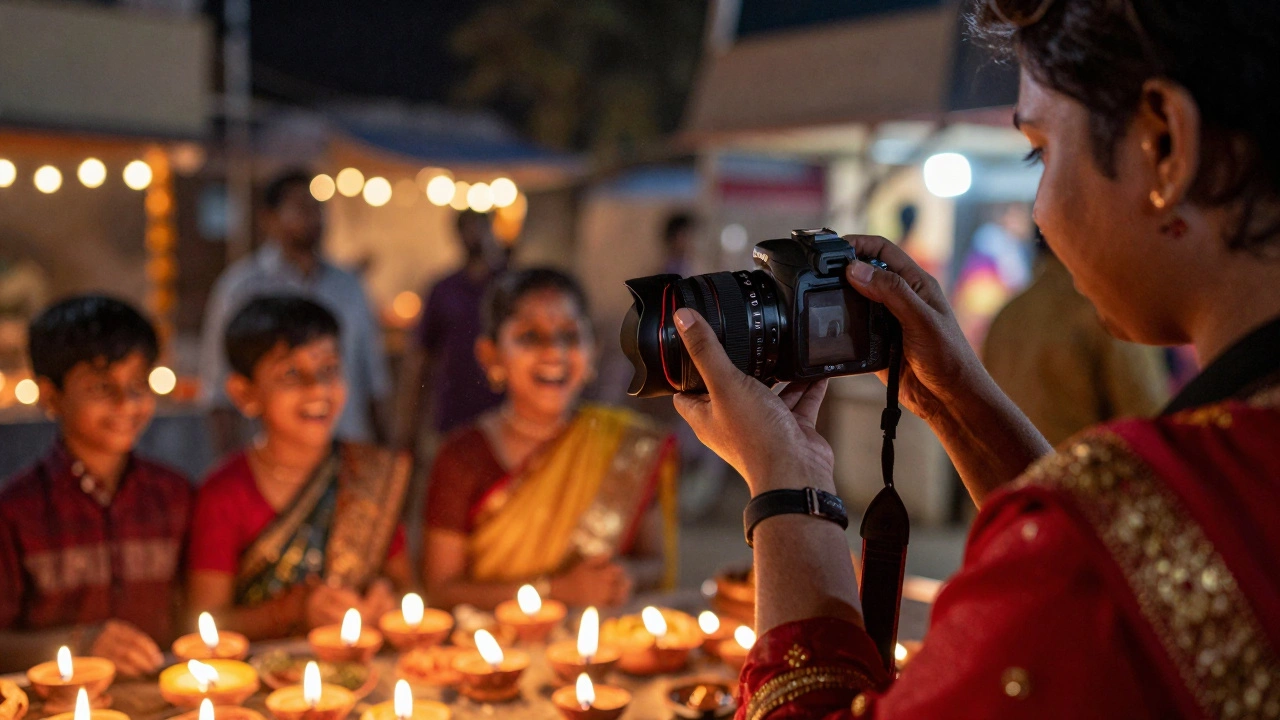
If you’ve ever tried to take a sharp photo of your child’s birthday party at sunset, only to get a blurry, grainy mess on your phone, you know why digital cameras still matter. Even in 2025, when every smartphone claims to be a ‘pro camera,’ nothing beats a dedicated digital camera for real-world photography in India’s unpredictable light and crowded scenes.
They capture more detail, even in low light
Smartphones use computational photography-software tricks-to make images look good. But they’re still stuck with tiny sensors, often smaller than your thumbnail. A typical entry-level digital camera like the Canon EOS R50 or Sony Alpha a6100 has a sensor that’s over 10 times larger. That means more light hits the sensor, and you get cleaner images at ISO 1600 or higher. In Diwali night markets, dim temple interiors, or early morning weddings in Rajasthan, your phone’s night mode will blur motion and flatten colors. A digital camera? You’ll keep the glow of diyas, the texture of silk saris, and the sparkle in your grandmother’s eyes-all without noise.
Real lenses, real control
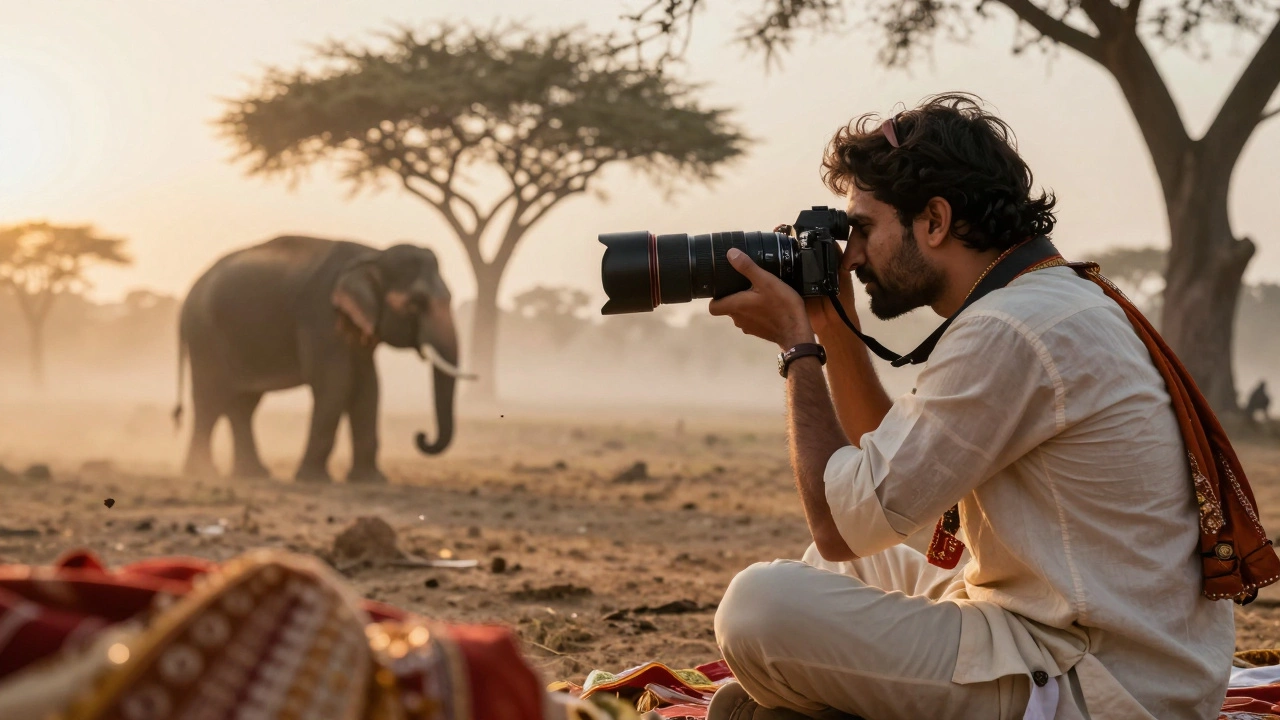
Smartphones have fixed lenses. You can’t zoom without losing quality. You can’t change depth of field to blur a busy street behind your subject. Digital cameras let you swap lenses. Want to shoot portraits with creamy bokeh? Use a 50mm f/1.8 lens-it costs less than ₹8,000. Need to capture a distant elephant at Ranthambore? A 100-400mm telephoto does it. Even the cheapest DSLR or mirrorless camera gives you manual controls for aperture, shutter speed, and ISO. That’s not just ‘pro’ gear-it’s the difference between a snapshot and a story.
Speed and reliability in fast moments
At a Mumbai wedding, the groom rides in on a horse. The bride’s family bursts into tears. The moment lasts 3 seconds. Your phone might take 1.2 seconds to focus. A good digital camera? It locks focus in 0.05 seconds. The Canon EOS R10, for example, tracks eyes and faces-even through face masks or turbans-with 100% coverage. It shoots 15 frames per second. You won’t miss the exact second the garland is placed. Smartphones lag. They buffer. They sometimes shut off focus when you half-press the button. Digital cameras don’t second-guess you. They just shoot.
They handle harsh Indian conditions better
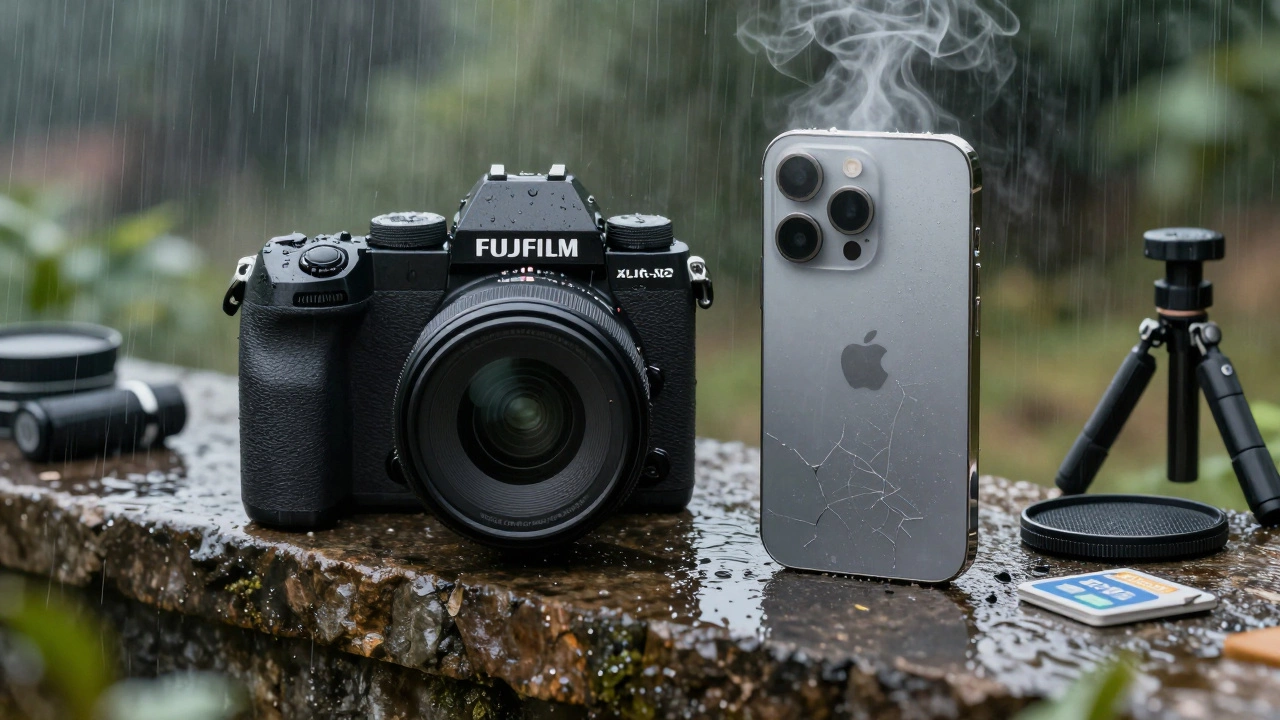
Monsoon humidity. Dust from Delhi roads. Heat in Jaipur hitting 45°C. Your phone overheats. The lens fogs. The screen glares. Digital cameras? They’re built tougher. Most mid-range models have weather-sealed bodies. The lens mounts are sealed. The buttons work even with damp fingers. You can carry one in a backpack through a crowded train station without worrying it’ll die. Try that with a ₹70,000 iPhone 16 Pro. It’ll sweat, glitch, and shut down. A Nikon D3500 or Fujifilm X-S20? It’ll keep going.
Long-term value and upgrade paths
Buying a smartphone every two years costs ₹80,000-₹1,20,000 over five years. A digital camera? Buy a used Canon EOS 80D for ₹25,000 today. Add a 50mm lens for ₹7,000. You’ve got a complete system. Five years later, you can upgrade the body to a newer model and keep your lenses. The same lenses work on Canon’s latest mirrorless cameras. That’s not possible with phones. You buy a new one, and all your accessories-external flashes, tripods, filters-go to waste. Digital cameras are investments. Phones are replacements.
They teach you photography, not just take pictures
When you use a smartphone, the camera decides everything. Auto mode, AI enhancements, HDR-it all happens behind the scenes. You don’t learn exposure. You don’t understand light. You don’t develop an eye. With a digital camera, you set the aperture. You adjust the shutter speed. You watch how changing one setting affects the whole image. In Delhi’s winter mornings, you’ll learn how to freeze mist with a fast shutter. In Goa’s golden hour, you’ll see how wide apertures turn crowds into soft backgrounds. That skill sticks with you. It’s why photographers who started with digital cameras still dominate professional portfolios-even in 2025.
Editing flexibility saves your worst shots
Smartphones shoot in compressed JPEGs. You can’t recover blown-out skies or muddy shadows. Digital cameras shoot in RAW. That means every color, shadow, and highlight is saved in full detail. You can fix an overexposed wedding dress in Lightroom. You can pull detail from a dark corner of a temple shrine. You can change the white balance after the fact-no more orange-tinted photos from indoor lighting. RAW files give you back control. Your phone? It locks in the look forever.
They’re not just for pros
You don’t need to be a professional to benefit. A student in Pune capturing street art. A parent in Chennai documenting their child’s first steps. A retiree in Ahmedabad photographing birds in the garden. These aren’t ‘hobbyists’-they’re people who care about preserving moments with quality. Digital cameras make that possible. You don’t need expensive gear. A used Sony a5100 with an 18-55mm kit lens costs under ₹20,000. It’s cheaper than a new smartphone. And it lasts longer.
What about smartphones? Aren’t they good enough?
They’re good for quick social posts. For WhatsApp stories. For recording a 15-second video of your dog. But if you want to print a 16x20 inch photo for your living room? If you want to sell a photo to a local gallery? If you want to capture your family’s Diwali celebration in a way that looks just as good in 10 years? Then you need more than a phone. Digital cameras don’t just take better pictures-they take meaningful ones.
Final thought: It’s about intention
When you pick up a digital camera, you’re choosing to slow down. To look. To compose. To care. In a world where photos are endless and forgettable, digital cameras help you make images that last. That’s why, in India’s chaotic, colorful, and ever-changing landscape, they’re still better.
Are digital cameras still worth buying in 2025?
Yes-if you care about image quality, control, and longevity. Smartphones are convenient, but they can’t match the sensor size, lens flexibility, or RAW capture of even budget digital cameras. For weddings, travel, street photography, or family memories in India’s varied lighting, a digital camera still delivers results your phone can’t.
What’s the best digital camera for beginners in India?
The Canon EOS R50 is the top pick for beginners. It’s compact, has excellent autofocus, and works with affordable RF lenses. The Sony Alpha a6100 is a close second-great for video and low light. Both are under ₹40,000 new, and you can find used models for ₹25,000-₹30,000. Avoid super-cheap point-and-shoots; they’re just fancy smartphones with a lens.
Do I need a DSLR or is mirrorless better?
Mirrorless is better for most people today. They’re smaller, quieter, and have better autofocus. DSLRs are bulkier and harder to find new. The Canon EOS R50, Nikon Z30, and Sony a6100 are all mirrorless and perfect for Indian photographers. DSLRs like the Canon 80D still work, but support and new lenses are fading.
Can I use my smartphone lenses with a digital camera?
No. Smartphone lenses are tiny, fixed, and glued to the phone’s sensor. Digital cameras use interchangeable lenses with different mounts (Canon RF, Sony E, Nikon Z). You can’t adapt phone lenses to cameras. But you can use filters, tripods, and external flashes with both-those accessories are universal.
How long do digital cameras last?
With basic care, a digital camera lasts 5-10 years. The shutter mechanism is rated for 100,000-200,000 clicks. Most users never hit that. Lenses last longer-often decades. Keep it dry, clean the sensor occasionally, and store it in a padded bag. A ₹25,000 camera bought in 2020 can still outperform a new phone today.