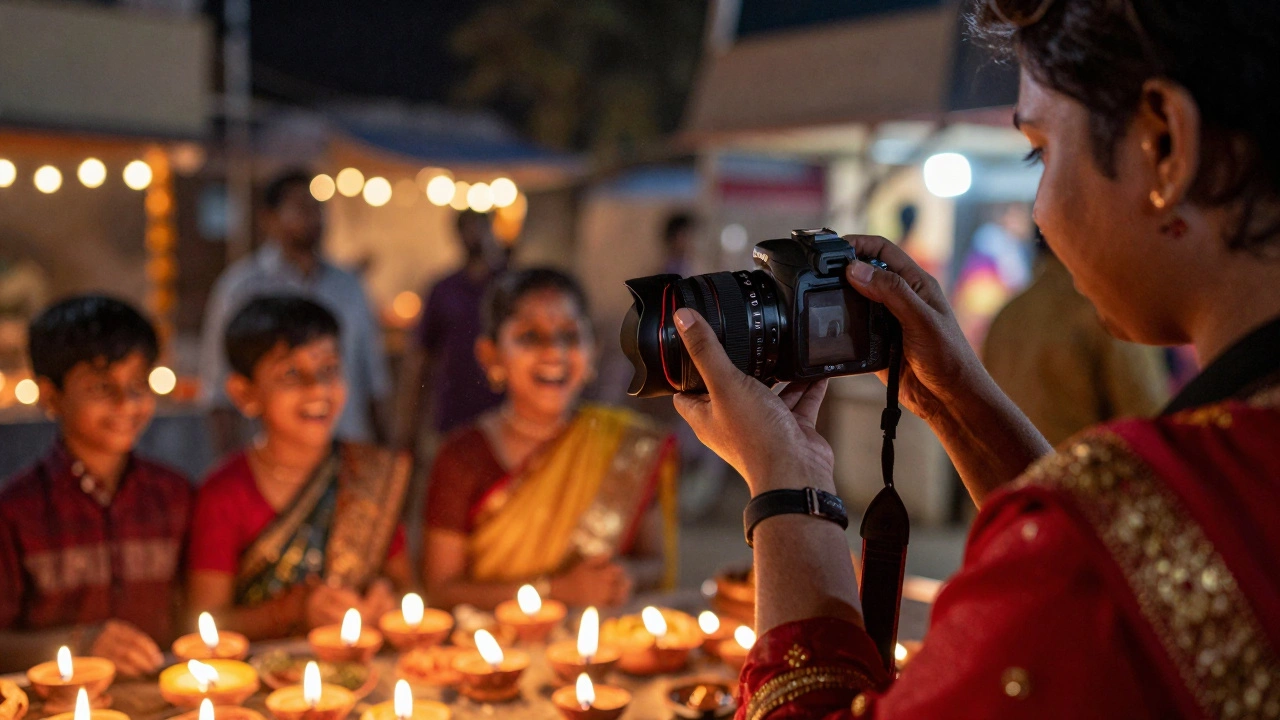
DSLR vs Smartphone: Which Camera Really Wins for Photos in India?
When it comes to DSLR vs smartphone, a digital single-lens reflex camera versus a mobile phone camera. Also known as professional camera vs phone camera, it’s not about which one is better—it’s about which one fits your life. Most people in India now take more photos with their phones than ever before. But if you’re serious about capturing weddings, events, or even just family moments with real depth and clarity, the question isn’t just about convenience—it’s about results.
Smartphone photography, taking photos using a mobile device with built-in cameras and computational editing. Also known as mobile photography, it’s changed everything. With AI-enhanced portraits, night modes, and one-tap editing, your phone can now take a decent photo in almost any light. But it still struggles with true background blur, low-light detail, and dynamic range when the scene gets complex. A DSLR camera, a professional-grade camera with interchangeable lenses and manual controls. Also known as digital single-lens reflex camera,> gives you control over every pixel. You decide the aperture, shutter speed, and ISO. You swap lenses for portraits, wide landscapes, or close-ups. And you get raw files—uncompressed, editable, print-ready images that hold up on big walls or albums.
Here’s what most people don’t tell you: in India, where lighting is unpredictable and moments are fast, many pros now use both. A DSLR for the key shots—the bride walking down the aisle, the group portrait with 20 relatives—and a smartphone for the candid laughs, the spilled chai, the kids running wild. Why? Because the best photo isn’t always the one with the sharpest focus. It’s the one that captures the feeling. And sometimes, your phone is already in your hand when the moment happens.
But if you’re trying to make money from photography—whether it’s wedding albums, corporate events, or social media content—your clients expect quality. A blurry background from a phone looks like a mistake. A grainy night shot looks cheap. A DSLR doesn’t just take better pictures—it tells your client you mean business. That’s why event photographers in Mumbai, Delhi, and Bangalore still carry DSLRs in their bags, even when their phones are full of photos.
And let’s be real: editing matters. You can’t fix a poorly exposed photo with an app if the sensor didn’t catch the detail in the first place. That’s why tools like GIMP, Photopea, and Snapseed are popular—but they work better when you start with clean, high-res data. A DSLR gives you that starting point. Your phone gives you speed and shareability.
So who wins? It depends. If you want to post a quick pic on Instagram, your phone is perfect. If you want to print a 20x30 inch photo that still looks sharp, you need a DSLR. If you’re learning photography, starting with a phone teaches you composition and timing. But if you want to turn this into a career, you’ll eventually need the control, the quality, and the credibility that only a DSLR brings.
Below, you’ll find real guides from Indian photographers who’ve tested both sides. From how to take passport photos with your phone to setting up a home studio with just a smartphone, to why some pros still swear by their DSLR—even in 2025. These aren’t theory posts. They’re from people who’ve been there, shot it, and learned what actually works when the lights go on and the guests arrive.