Drone Flight Zone & Compliance Checker
Flight Parameters
Enter your flight details to see if you need a permit and what risks apply.
Airspace Zone Guide
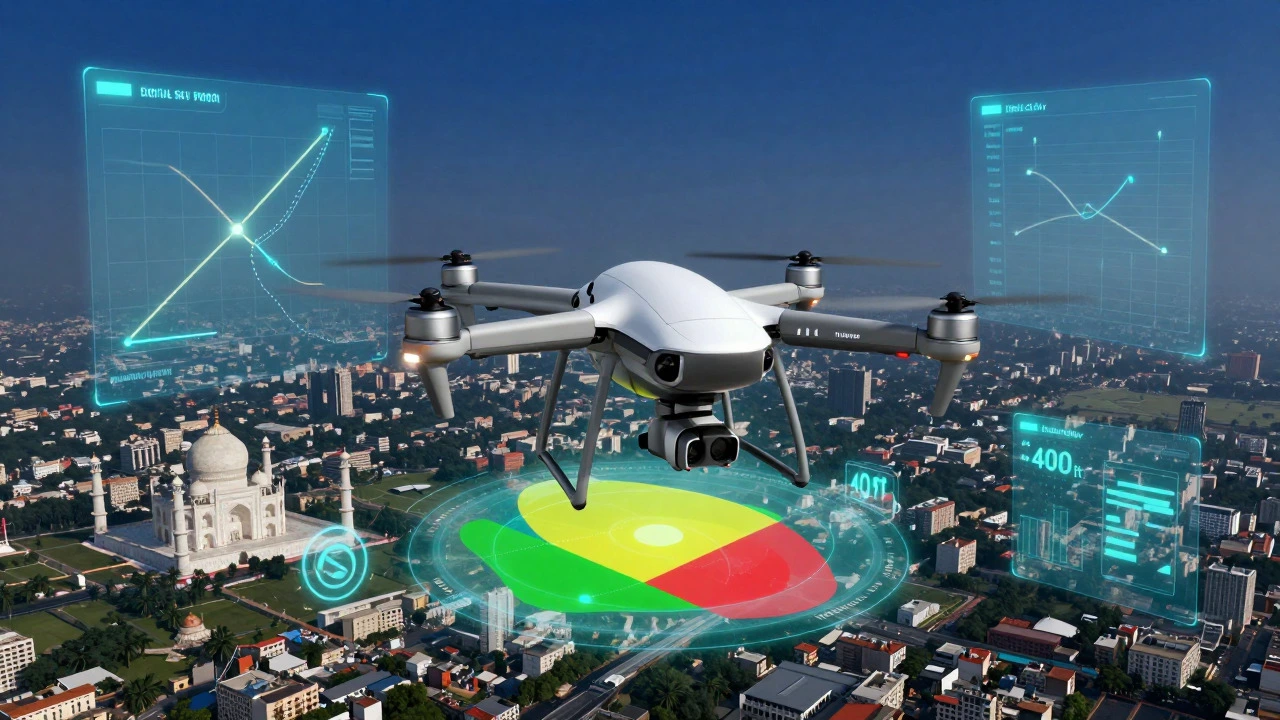
Green Zone
Open airspace. Auto-approved via UTM app. Minimal restrictions.
Yellow Zone
Semi-restricted. Requires manual approval (up to 24 hours).
Red Zone
No-Fly Zone. Strictly prohibited without special waiver.
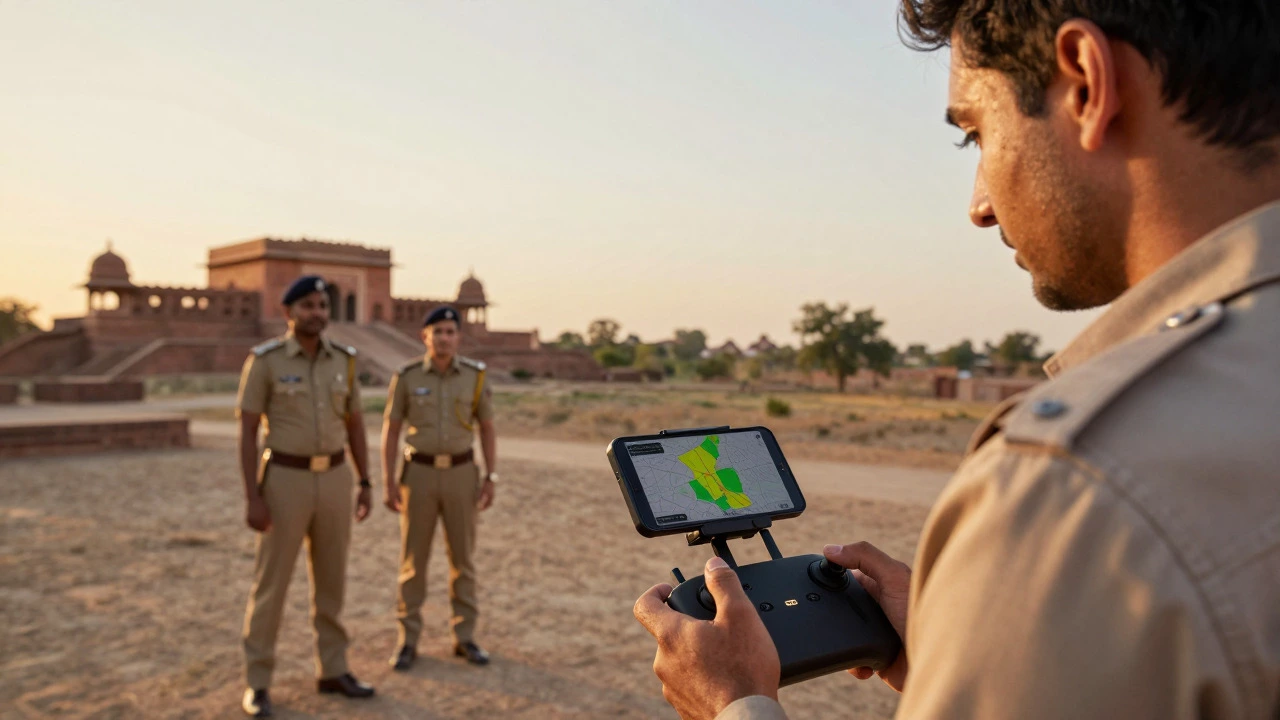
You’ve just landed your drone in the middle of a stunning landscape near Jaipur. The lighting is perfect. You’re about to capture the shot of a lifetime when a local police officer waves you over. Your heart sinks. Are you going to get fined? Confiscated? Or worse?
This scenario plays out more often than it should because the rules around drone photography in India have shifted dramatically in recent years. If you are wondering whether flying a drone for photos or videos is legal, the short answer is yes-but only if you follow a very specific set of protocols.
The days of casual, unregulated hobbyist flights are largely gone. Since the implementation of the Digital Sky Platform and the Drone Rules 2021, the government has digitized almost every aspect of drone operations. As of mid-2026, the system is stricter but also more transparent. You don’t need a physical paper permit from a distant office anymore; you need a digital approval that pops up on your phone screen before you even flip the propellers.
The Legal Framework: What Changed in 2021?
To understand where we stand today, we have to look at the foundation laid by the Ministry of Civil Aviation. The Drone Rules 2021 replaced the older, cumbersome regulations that treated drones like heavy aircraft. These rules categorized drones based on weight and purpose, making it easier for photographers to comply without jumping through bureaucratic hoops.
The core philosophy is simple: transparency and traceability. Every drone must be registered, every pilot must be licensed (or certified), and every flight must be authorized via the Digital Sky app. This isn't just red tape; it’s about national security and airspace safety. With thousands of drones now in operation across cities like Mumbai, Delhi, and Bangalore, the government needed a way to track who is flying what, where, and when.
If you ignore these rules, the consequences can be severe. Under the Aircraft Act, unauthorized drone operations can lead to fines ranging from ₹50,000 to ₹25 lakhs, depending on the severity and location of the violation. In sensitive areas, your drone could be confiscated immediately.
Step-by-Step: How to Fly Legally for Photography
Getting permission doesn’t have to be a nightmare, but it does require preparation. Here is the exact workflow you need to follow to ensure your next shoot is 100% legal.
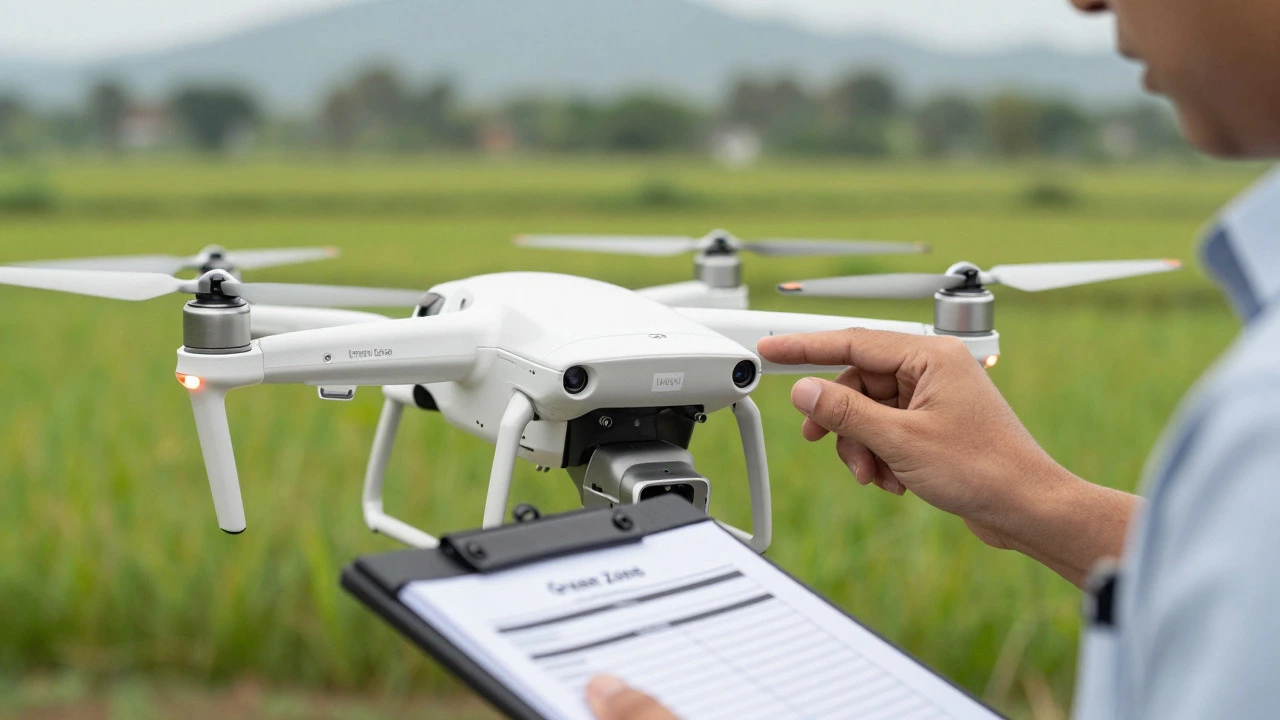
- Register Your Drone: First, you need to register your drone on the Digital Sky Platform. This is a web portal and mobile app managed by the Directorate General of Civil Aviation (DGCA). You’ll need your drone’s Unique Identification Number (UIN), which comes with the device or can be obtained after manufacturing/importing.
- Get Pilot Certification: For micro and nano drones (under 2 kg), you technically don’t need a full Remote Pilot License (RPL) if you pass a basic certification course from an approved academy. However, for larger drones used in professional photography, an RPL is mandatory. Many online academies offer these courses now, taking about two weeks to complete.
- Check No-Fly Zones: Before booking a shoot, check the map on the Digital Sky app. Red zones are no-fly areas. These include airports, military installations, borders, and critical infrastructure like nuclear plants. Flying here without explicit special permission is a fast track to legal trouble.
- Apply for Flight Authorization: Use the UTM System (Unmanned Traffic Management) within the Digital Sky app. You submit a flight plan including coordinates, altitude, time, and date. For most recreational and commercial photo shoots in green zones, this approval is automated and instant. For yellow zones (semi-restricted), it might take 24 hours for manual review.
- Display Your ID: Ensure your drone’s UIN is visibly displayed on the aircraft. It should be legible from a distance of 30 meters. If it gets scratched off, fix it before you fly.
Where Can You Actually Shoot? Understanding Airspace Zones
India divides its airspace into three color-coded categories. Knowing these colors is crucial for any photographer planning a trip.
| Zone Color | Description | Permission Required? | Typical Locations |
|---|---|---|---|
| Green Zone | Open airspace with minimal restrictions. | Yes, but usually auto-approved via UTM. | Rural areas, open fields, designated parks. |
| Yellow Zone | Semi-restricted airspace requiring prior authorization. | Yes, manual approval from authorities. | Near towns, some tourist spots, outskirts of cities. |
| Red Zone | No-fly zone unless specifically permitted. | Strictly prohibited without special waiver. | Airports, military bases, border areas, Taj Mahal complex. |
A common mistake photographers make is assuming that just because a place is public, it’s flyable. For example, while you can walk around the Taj Mahal, flying a drone there is strictly banned due to its status as a protected monument and proximity to restricted airspace. Always double-check the specific coordinates on the Digital Sky app, not just general city maps.
Commercial vs. Personal Use: Does It Matter?
Many beginners ask if they need different permits for personal fun versus paid work. The truth is, the operational rules are nearly identical. Whether you are filming your wedding or shooting a real estate listing for a client, you still need registration, pilot certification, and flight authorization.
However, if you are running a business, you need a Drone Trading License issued by the Ministry of Civil Aviation. This license allows you to buy, sell, lease, or rent drones. Without it, you cannot legally operate a drone rental service or offer commercial drone services as a registered entity. For individual freelancers, registering as a sole proprietorship and getting the trading license is a smart move to legitimize your income and avoid tax scrutiny later.
Insurance is another factor. While not always strictly enforced for small hobbyist drones, professional photographers should carry third-party liability insurance. If your drone crashes into a car or injures someone, standard health insurance won’t cover it. Specialized drone insurance policies are available from several Indian insurers now, costing roughly ₹5,000 to ₹15,000 per year depending on coverage limits.
Common Pitfalls That Get Photographers in Trouble
I’ve seen talented photographers lose their gear not because they didn’t know how to fly, but because they ignored the fine print. Here are the biggest traps to avoid.
- Flying Above 400 Feet: The maximum altitude for visual line-of-sight (VLOS) flights is 400 feet above ground level (AGL). Going higher requires special permission and radar equipment. Most consumer drones have this limit built-in, but geofencing can sometimes fail in remote areas. Keep an eye on your altimeter.
- Night Flights: Flying after sunset is generally prohibited unless you have specific night-flying permissions and proper anti-collision lights. Night photography looks great, but it’s illegal without extra paperwork.
- Crowds and Privacy: Even if the airspace is clear, hovering directly over people’s private property can lead to civil lawsuits under privacy laws. Avoid flying over residential rooftops without consent. Also, keep a safe distance from crowds. A falling drone is dangerous.
- Ignoring Local Police: Sometimes, local police may ask you to stop even if you have digital approval. This happens during high-security events or VIP movements. Carry a screenshot of your Digital Sky approval and show it politely. Usually, cooperation resolves the issue quickly.
Tech Tips for Better Shots Within the Rules
Working within regulatory constraints can actually improve your photography. Instead of chasing risky heights, focus on composition and timing.
Since you are limited to 400 feet, use lower angles to create depth. Fly parallel to buildings rather than straight down. Use the golden hour-early morning or late evening-not just for light, but because air traffic is lower, making approvals easier and flights safer. Also, invest in a good ND filter. Since you can’t go super high to get wide shots, controlling exposure at lower speeds becomes critical for cinematic motion blur.
Finally, always do a pre-flight check. Wind conditions in coastal cities like Mumbai or Chennai can change rapidly. A gust can push your drone out of VLOS, which is a violation. Stay aware of your surroundings, not just your screen.
What Happens If You Break the Rules?
The enforcement mechanism has become smarter. The Remote ID technology embedded in newer drones broadcasts its identity to nearby receivers. Authorities can detect unauthorized drones instantly. If caught, the process usually involves confiscation of the drone and a notice to appear before a magistrate. Fines are substantial, and repeat offenders face bans from operating drones for years.
Don’t risk it. The cost of compliance is low compared to the cost of losing your equipment and paying legal fees. Take the time to register, get certified, and plan your flights properly.
Do I need a license to fly a toy drone in India?
If your drone weighs less than 250 grams (nano category) and has no camera, you may not need a license for recreational use. However, if it has a camera, it falls under surveillance rules, and registration is recommended. For any drone over 250g, registration and pilot certification are mandatory.
How long does it take to get drone flight approval on Digital Sky?
For Green Zone flights, approval is often instant or takes a few minutes. For Yellow Zones, it can take up to 24 hours as it requires manual verification by local authorities. Plan your shoots accordingly and apply at least a day in advance for restricted areas.
Can I fly my imported DJI drone in India?
Yes, provided you have registered it on the Digital Sky platform and obtained a Unique Identification Number (UIN). Importing drones personally is allowed for non-commercial use, but you must pay applicable customs duties and GST. Commercial importers need a separate license.
Is it legal to fly a drone near the Taj Mahal?
Generally, no. The Taj Mahal complex is a Red Zone due to its heritage status and security requirements. Flying a drone there without explicit special permission from the Archaeological Survey of India and local police will result in immediate confiscation and fines.
What is the maximum height I can fly my drone?
The standard limit is 400 feet (120 meters) above ground level for Visual Line of Sight (VLOS) operations. Flying higher requires special permission from the Air Traffic Control and additional safety measures.