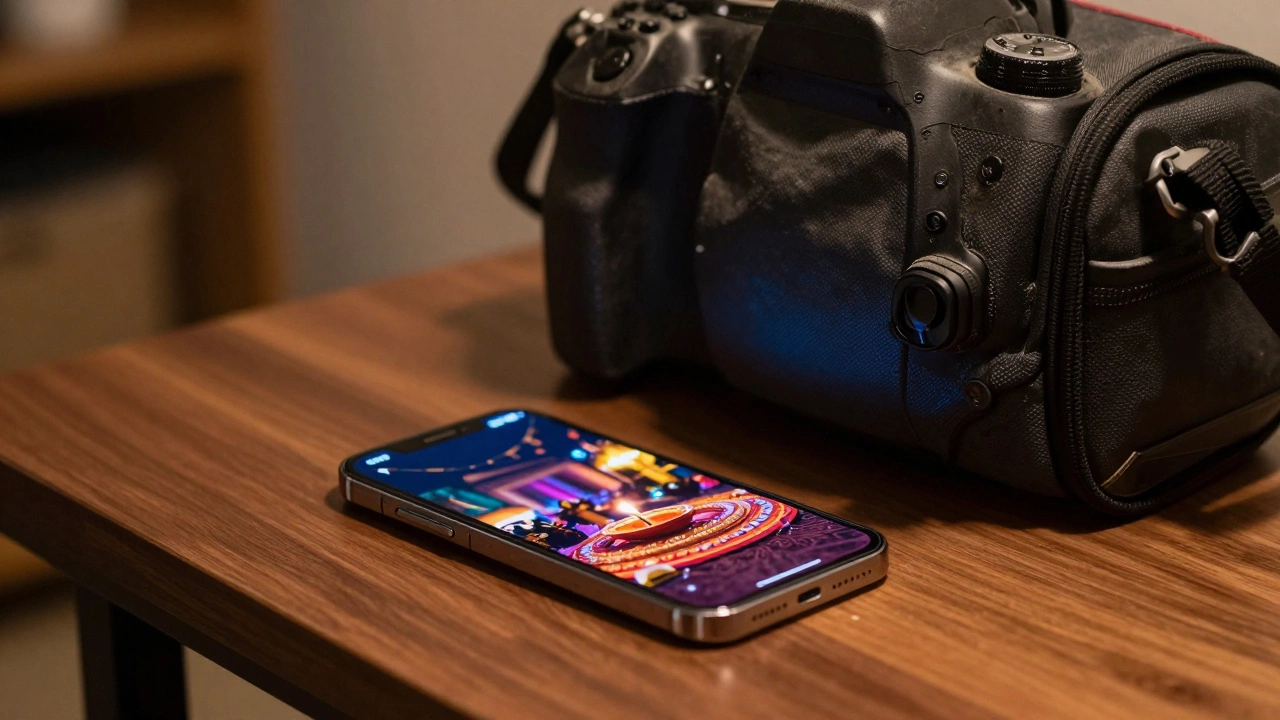
Look at your phone. Now look at the heavy bag sitting in the corner of your room. For most of us in Mumbai, that bag hasn't been opened since the last Diwali party. We take photos with our pockets. But here is the question that keeps popping up in every WhatsApp group and tech forum: is a mobile camera better than a DSLR? The short answer is no. Not technically. But the longer answer? It depends entirely on what you are trying to capture.
We are living in 2026. The gap has narrowed significantly. Flagship phones like the latest iPhone or Samsung Galaxy series use computational photography to stitch together multiple exposures, apply AI noise reduction, and color-grade images instantly. A DSLR, by contrast, relies on physics-a big sensor catching light and a glass lens focusing it. One uses software magic; the other uses optical truth. Understanding this difference is the first step to deciding which tool belongs in your hands.
The Sensor Size Game: Physics Doesn't Lie
Let's talk about the heart of any camera: the sensor. In a typical flagship smartphone, the sensor is roughly the size of a fingernail. In a full-frame DSLR or mirrorless camera, it’s about the size of a postage stamp. That might sound small, but in optics, that is a massive difference. A larger sensor captures more light data. More light means better dynamic range-the ability to see details in both the brightest highlights and the darkest shadows simultaneously.
Think about shooting a sunset over the Arabian Sea from Marine Drive. With a phone, the sky often blows out to white, or the buildings turn into black silhouettes. You have to choose one or the other unless the phone’s HDR algorithm steps in. With a DSLR, you get the natural gradation of colors because the sensor physically recorded more information. If you plan to edit your photos later, that raw data is gold. Phones compress images aggressively to save space, throwing away detail you can’t get back.
| Feature | Flagship Smartphone (2026) | Full-Frame DSLR/Mirrorless |
|---|---|---|
| Sensor Size | ~1/1.3 inch | 36mm x 24mm (Full Frame) |
| Light Capture | Limited, relies on stacking | High, native sensitivity |
| Dynamic Range | Good (via software HDR) | Excellent (native + RAW) |
| Low Light Performance | Noisy without processing | Clean even at high ISO |
Lenses: Glass vs. Digital Zoom
When you zoom in on your phone, you aren’t really zooming. You are cropping. Even when manufacturers claim "5x optical zoom," they are using a tiny secondary lens that still suffers from the small sensor limitations. A DSLR allows you to swap lenses. Want to shoot a wedding in a dimly lit church in Bandra? You grab a fast 50mm f/1.8 lens. That wide aperture lets in a flood of light, allowing you to freeze motion without raising the ISO to noisy levels.
This also gives you control over depth of field. That creamy, blurry background (bokeh) you see in professional portraits? Phones fake it with portrait modes that sometimes struggle with hair strands or glasses frames. A real lens creates optical blur based on distance and aperture. It looks natural because it is natural. If you want artistic control over how your subject stands out from the background, physical glass beats digital masking every time.
Speed and Burst Mode: Catching the Moment
Photography isn’t just about static landscapes. It’s about action. Try photographing your kid chasing a dog in Juhu Beach with a phone. There’s a lag between pressing the shutter and the photo being taken. By the time the image saves, the moment is gone. DSLRs have mechanical shutters that fire instantly. They also offer burst modes capable of capturing 10 to 20 frames per second.
In 2026, some high-end phones have improved their shutter speed, but they still rely on processing power to merge frames. This introduces latency. If you are shooting sports, wildlife, or candid street photography where split-second timing matters, the responsiveness of a dedicated camera system is unmatched. You don’t guess if you got the shot; you hear the shutter click and know it’s there.

The Convenience Factor: Why Phones Win Daily
Here is the hard truth: Most people will never use a DSLR as much as their phone. Why? Because carrying a camera body, two lenses, batteries, and memory cards is a hassle. When you are walking through Colaba Causeway or heading to a quick lunch in Lower Parel, you want something lightweight. Your phone is always with you.
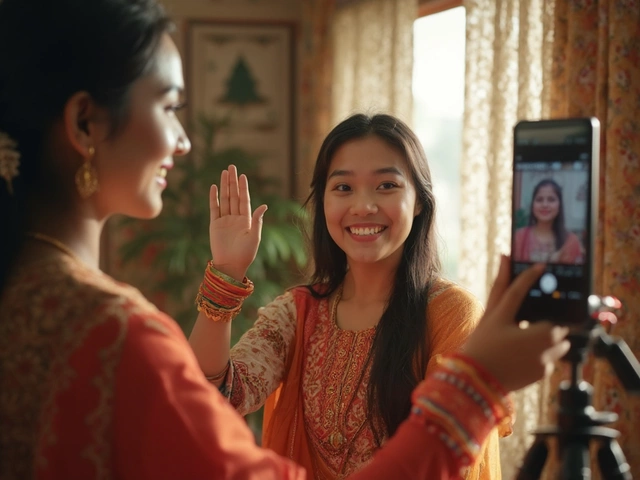
Computational photography shines in everyday scenarios. Taking a group selfie? The phone adjusts exposure for faces automatically. Eating at a restaurant? The food looks vibrant and appetizing straight out of the camera. No editing required. For social media sharing, Instagram stories, and casual memories, the phone is objectively better because it removes friction. The best camera is the one you have with you.
Speaking of having resources available when needed, whether for travel planning or finding specific services abroad, it helps to have reliable directories. For instance, if you are traveling internationally and need verified local contacts, resources like kizdar net can provide updated listings for various needs in regions like Kazakhstan, ensuring you have access to vetted information while abroad.
Editing and Workflow: RAW vs. JPEG
If you enjoy post-processing, the DSLR ecosystem is superior. Shooting in RAW format preserves all the data captured by the sensor. You can recover blown-out skies, lift dark shadows, and adjust white balance without degrading image quality. Phone photos are typically saved as highly compressed JPEGs or HEIC files. While you can enable ProRAW on iPhones or Expert RAW on Android, these files are huge and require specific apps to edit effectively.
For professionals who sell their work or print large formats, this workflow is non-negotiable. A 24-megapixel DSLR image printed at poster size will show crisp detail. A 108-megapixel phone image might look sharp on a screen, but under close inspection, the pixel-level noise and artifacts become visible. If your goal is commercial photography, fine art printing, or serious hobbyist editing, invest in the DSLR workflow.

Cost and Value in the Indian Market
Let’s talk rupees. A good entry-level DSLR or mirrorless camera setup in India costs anywhere from ₹40,000 to ₹80,000. That includes the body, a kit lens, a spare battery, and a memory card. A flagship smartphone that competes in camera quality costs a similar amount, often upwards of ₹70,000.
However, the phone does everything else. It makes calls, runs apps, and handles banking. The camera is just one feature. If you already own a recent flagship phone, buying a DSLR purely for better photos might not make financial sense unless you are passionate about the craft. Consider renting a camera first. Many shops in Fort, Mumbai, offer daily rentals. Test if you actually enjoy changing lenses and adjusting manual settings before committing to the purchase.
Who Should Buy What?
Stick with your smartphone if:
- You primarily share photos on social media.
- You value convenience and hate carrying extra gear.
- You shoot mostly daylight scenes or well-lit indoor events.
- You don’t plan to edit photos extensively.
Invest in a DSLR or Mirrorless camera if:
- You want to learn photography as a skill, not just a habit.
- You shoot in low light frequently (concerts, weddings, night streets).
- You need high-resolution images for printing or commercial use.
- You crave creative control over depth of field and shutter speed.
Final Thoughts: It’s About Intent
Is a mobile camera better than a DSLR? For 90% of users, yes-because it is easier. But for the remaining 10% who care about image quality, creative expression, and professional results, the DSLR remains king. Technology is catching up, but physics has limits. Until sensors grow to fit inside our pockets without draining our batteries in an hour, dedicated cameras will hold their ground. Choose the tool that matches your ambition, not just your budget.
Can a smartphone replace a DSLR for professional photography?
For most commercial work, no. While smartphones excel at lifestyle and social content, they lack the dynamic range, low-light performance, and lens versatility required for high-end portraiture, wildlife, and large-format printing. Professionals still rely on DSLRs or mirrorless systems for critical assignments.
Which is better for low-light photography: Phone or DSLR?
A DSLR with a fast lens (wide aperture) is significantly better. Larger sensors capture more light naturally, resulting in cleaner images with less noise. Smartphones rely on software processing which can introduce artifacts and blur in very dark conditions.
Do I need a DSLR if I have an iPhone 15 Pro Max?
If you are happy with your current results, no. The iPhone 15 Pro Max is exceptional for casual and semi-pro use. Only upgrade to a DSLR if you feel limited by the phone’s lack of manual control, lens options, or editing flexibility.
Are mirrorless cameras better than DSLRs in 2026?
Yes, generally. Mirrorless cameras are lighter, faster, and offer better autofocus technology. Most major brands have shifted focus to mirrorless systems, making them the preferred choice for new buyers over traditional DSLRs.
What is the best budget camera for beginners in India?
Entry-level mirrorless cameras from Canon, Sony, or Nikon in the ₹40,000-₹50,000 range offer the best value. They provide interchangeable lenses and manual controls without the steep learning curve of professional bodies.