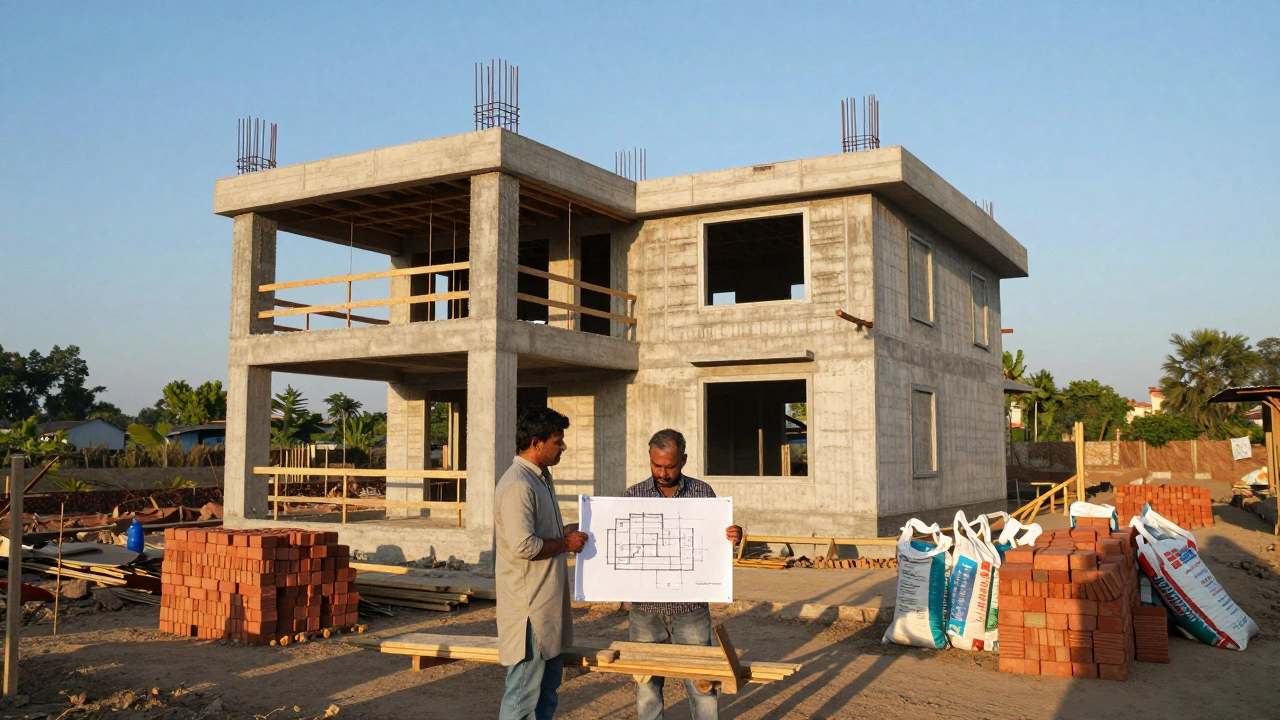
4 BHK House Construction Cost Calculator (India 2026)
Estimate the construction cost for your dream home based on area and quality level.
Picture this: you’ve finally saved up for your dream home. You have the land, the vision, and maybe even a rough sketch of where the master bedroom will go. But then comes the question that keeps every homeowner awake at night: how much is this actually going to cost?
If you are planning to build a 4 BHK (Bedroom Hall Kitchen) house in India in 2026, you are looking at a significant investment. The short answer? Expect to spend between ₹35 lakhs and ₹75 lakhs for a standard 2,000-2,500 sq. ft. home, depending on your location and material choices. But that range is too broad to be useful. Let’s break down exactly where your money goes, so you aren’t blindsided by hidden costs.
The Baseline: Construction Rates Per Square Foot
To understand the total cost, we first need to look at the rate per square foot. In 2026, construction costs in India vary wildly based on whether you are in a metro city like Mumbai or Delhi, or a tier-2 city like Indore or Coimbatore. However, there are three general tiers you can use as a benchmark.
| Quality Level | Cost Range (₹/sq. ft.) | What You Get |
|---|---|---|
| Economy | ₹1,200 - ₹1,500 | Basic cement, local bricks, simple tiles, minimal finishing. |
| Standard | ₹1,600 - ₹2,200 | Branded sanitaryware, modular kitchen basics, good paint, vitrified tiles. |
| Premium/Luxury | ₹2,500+ | Imported marble, smart home features, false ceilings, high-end fixtures. |
For a typical 4 BHK house, the built-up area usually falls between 2,000 and 2,500 square feet. If you choose the standard quality option, which is what most middle-class families aim for, the calculation looks like this:
- 2,000 sq. ft. × ₹1,800 = ₹36 Lakhs
- 2,500 sq. ft. × ₹1,800 = ₹45 Lakhs
This covers the "shell and core" plus basic interiors. But here is the catch: these rates often exclude the cost of the land, architectural fees, and heavy landscaping. Always add a 10% buffer for unexpected expenses.
Breaking Down the Cost Components
Where does the money actually disappear? In construction, it helps to think in terms of percentages. Understanding this split prevents contractors from inflating specific line items.
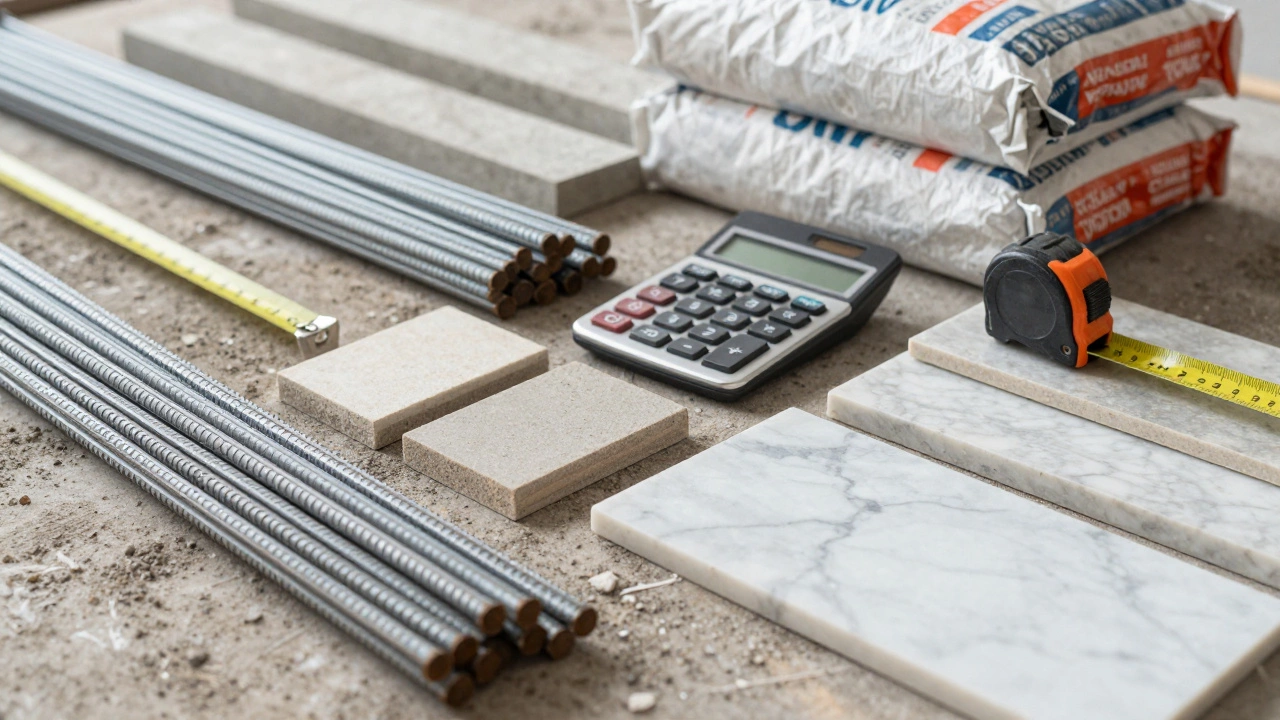
- Cement, Steel, and Bricks (40-45%): This is the skeleton of your house. Prices for steel fluctuate with global markets. In 2026, TMT steel prices have stabilized slightly, but cement remains volatile due to energy costs. For a 4 BHK, you might need around 15-20 tons of steel and 800-1,000 bags of cement.
- Labor (25-30%): Skilled labor is getting more expensive. Masons, carpenters, and electricians charge daily wages that have risen by nearly 15% over the last two years. If you hire a contractor, their profit margin is built into this labor cost.
- Finishing Materials (20-25%): This includes tiles, paints, doors, windows, and sanitary ware. This is where you can save or splurge. Choosing local ceramic tiles instead of imported porcelain can save you lakhs.
- Miscellaneous & Contingency (5-10%): Plumbing fittings, electrical switches, scaffolding, and waste disposal. Never skip this buffer.
Location Matters: Metro vs. Tier-2 Cities
Your zip code changes your price tag. Building a 4 BHK in Mumbai or South Delhi is fundamentally different from building one in Jaipur or Lucknow.
In metropolitan areas, the cost isn't just about materials; it's about logistics. Transporting sand and gravel into congested cities costs more. Labor charges are higher because workers demand better pay to live in expensive cities. Additionally, metro cities often have stricter building codes, requiring more concrete reinforcement and fire safety measures, which drives up the structural cost.
In contrast, tier-2 and tier-3 cities offer cheaper labor and easier access to raw materials if you are sourcing locally. You might save 15-20% on the total construction bill simply by building outside the major metros. However, ensure that skilled architects and engineers are available in your area, as poor design can lead to costly repairs later.
Hidden Costs That Blow Up Your Budget
I’ve seen many homeowners stick to their budget for six months, only to run out of money in month seven. Why? Because they forgot about the hidden costs. Here are the big ones:
- Architectural and Engineering Fees: A good architect charges 3-5% of the total project cost. Don’t skip this. A bad layout wastes space and increases construction complexity.
- Government Approvals: Building permits, property tax adjustments, and connection fees for water and electricity can add up to ₹1-2 lakhs depending on your municipality.
- Kitchen and Bathrooms: These rooms consume disproportionate amounts of your budget. A single premium bathroom suite can cost ₹50,000+. With four bedrooms, you likely have 3-4 bathrooms. That’s a huge chunk of cash.
- Modular Kitchen: If you want a modern kitchen, expect to pay ₹2-4 lakhs extra for cabinets, countertops, and appliances. This is rarely included in the base construction rate.
DIY vs. Contractor: Which Saves More?
You have two main paths: hiring a turnkey contractor or managing the project yourself (acting as your own general contractor).
Hiring a Contractor: This is the stress-free option. They handle labor, material procurement, and timelines. You pay a premium for their expertise and convenience-usually 10-15% more than DIY. However, you avoid the headache of chasing suppliers and arguing with masons.
Self-Managing (DIY Project Management): If you have time and some technical knowledge, you can save significantly. You buy materials directly from dealers, avoiding the contractor’s markup. You hire laborers directly on a daily or monthly basis. This requires you to be on-site constantly. One mistake in ordering wrong-sized tiles or underestimating cement needs can eat up all your savings. Only choose this if you can dedicate at least 2-3 hours a day to the site.
Tips to Keep Costs in Check
Building a 4 BHK doesn’t mean you have to bankrupt yourself. Here are practical ways to trim the fat without compromising safety:
- Simplify the Design: Complex curves, multiple roof levels, and intricate facades cost more to build. Stick to rectangular shapes and flat roofs where possible. Simple geometry is cheaper and faster.
- Choose Local Materials: Importing granite from another state adds transport costs. Use locally available stone or brick. It’s often durable enough and fits the regional climate better.
- Fix Finishes Early: Decide on your tiles, paint colors, and door styles before construction starts. Changing your mind mid-project leads to wastage and rush charges.
- Phased Interior Work: Build the shell and do basic plastering first. You can install expensive flooring and furniture after moving in. This spreads out the cash flow burden.
Is a 4 BHK Right for You?
Before you start digging, ask yourself if you really need four bedrooms. In India, extended families often justify the extra space. But if you are a nuclear family, a 3 BHK might suffice, saving you 20-25% on construction costs. Alternatively, consider building a 3 BHK now and leaving the fourth room as an open study or hobby space that can be enclosed later if needed. This flexible approach reduces initial costs while keeping future options open.
What is the cheapest way to build a 4 BHK house in India?
The cheapest method involves using local materials, a simple rectangular design, and self-managing the labor. Opt for economy-grade finishes like ceramic tiles and emulsion paint. Avoid complex architectural features. Expect to pay around ₹1,200-₹1,400 per sq. ft. in non-metro areas.
Does the construction cost include interior decoration?
Typically, no. Standard construction rates cover structure, plastering, basic tiling, and painting. Furniture, curtains, lighting fixtures, and modular kitchens are considered separate interior decoration costs and can add 20-30% to your total budget.
How long does it take to build a 4 BHK house?
On average, it takes 12 to 18 months to complete a 4 BHK house from foundation to handover. Delays are common due to weather, material shortages, or approval issues. Plan for at least 18 months to be safe.
Can I get a loan for constructing my own house?
Yes, most banks in India offer 'Home Construction Loans.' They disburse money in stages based on construction progress (e.g., foundation, slab casting, completion). Interest rates are similar to regular home loans, but you must provide a detailed estimate and architect drawings.
What are the additional government charges for building a house?
You need to pay for building plan approvals, property tax increments, and utility connections (water, sewer, electricity). Some municipalities also charge a demolition permit fee if you are rebuilding. These costs vary by city but typically range from ₹50,000 to ₹2 lakhs.