Photography Studio ROI & Break-Even Calculator
Estimate whether investing in your own studio is financially viable compared to renting hourly spaces. Adjust the inputs based on your specific city and business model.
1. Ownership Costs (Monthly)
2. Revenue & Usage
Financial Verdict
You’re staring at a listing for a 1,500 sq. ft. space in Bangalore or Delhi NCR. The rent is steep, the deposit is massive, and your bank account is sweating. But the dream of owning your own photography studio feels intoxicating. You imagine the control, the branding, the ability to shoot whenever you want without fighting for slots. But here’s the cold hard truth: for most solo photographers in India, buying or leasing a dedicated studio is a financial trap unless you have the volume to back it up.
The question isn’t just "can I afford the rent?" It’s "will this asset generate enough return to justify the risk?" In 2026, the landscape has shifted. Co-working photo spaces are everywhere, equipment is cheaper, and clients care less about the four walls and more about the final image. So, is investing in a studio worth it? Let’s break down the numbers, the risks, and the specific scenarios where it actually makes sense.
The Real Cost of Ownership vs. Renting
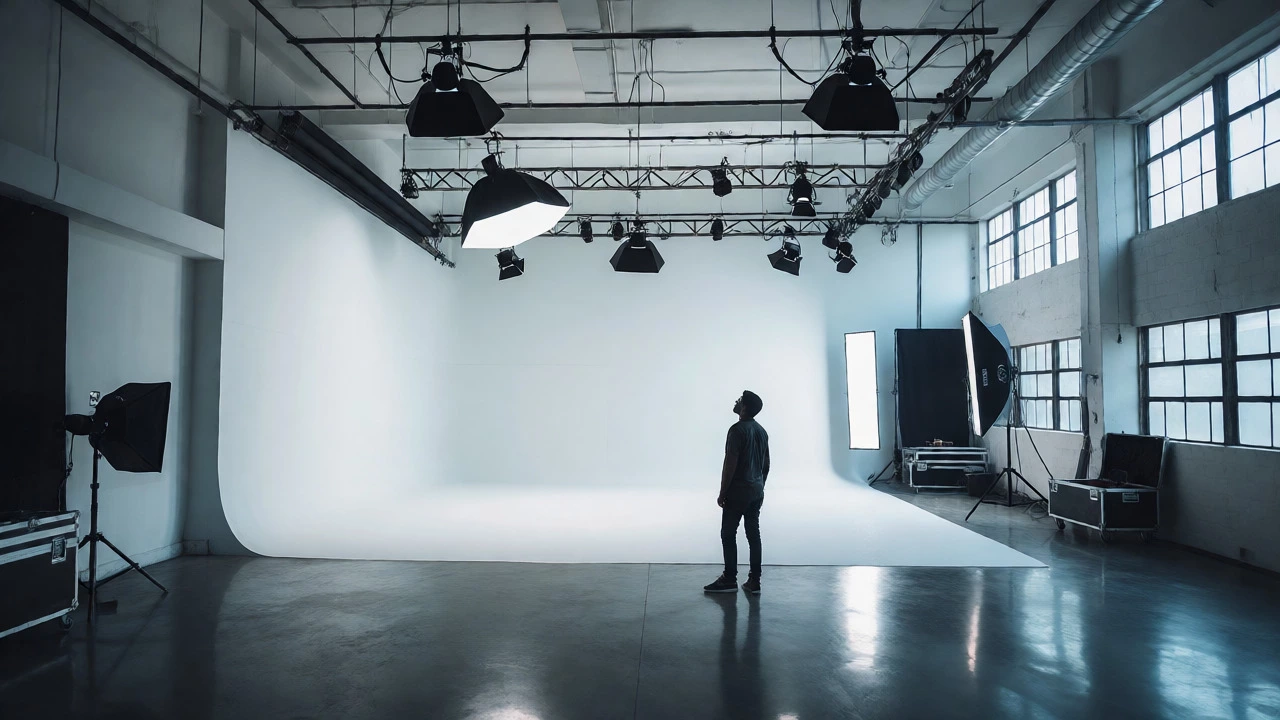
Let’s talk money. Not the vague "it depends" kind, but the actual cash flow. If you set up a basic portrait studio in a Tier-1 city like Mumbai or Pune, your initial capital expenditure (CapEx) is no joke. We aren’t just talking about lights. You need soundproofing, flooring that doesn’t reflect weird colors, HVAC systems because hot lights make studios unbearable, and furniture that looks good on camera but survives abuse.
Here’s a realistic breakdown for a mid-tier setup in 2026:
| Expense Category | Low End Estimate | High End Estimate | Notes |
|---|---|---|---|
| Security Deposit & Brokerage | ₹3,00,000 | ₹15,00,000 | Varies heavily by city; often 3-6 months' rent. |
| Interior Fit-out & Soundproofing | ₹5,00,000 | ₹20,00,000 | Acoustic panels, cyclorama wall, changing area. |
| Lighting & Grip Equipment | ₹4,00,000 | ₹12,00,000 | Strobes, softboxes, stands, modifiers. |
| Furniture & Props | ₹1,00,000 | ₹5,00,000 | Sofas, stools, background stands, props. |
| Licensing & Legal | ₹50,000 | ₹2,00,000 | Shop & Establishment Act, trade license. |
| Total CapEx | ₹13,50,000 | ₹54,00,000 | Before first month's operational costs. |
Now, look at the monthly operating expenses (OpEx). Even if you shoot nothing, you’re paying electricity (ACs and strobes eat power), internet, cleaning staff, and maintenance. In cities like Gurgaon or Hyderabad, commercial electricity rates are high. A single day of heavy shooting can add ₹2,000-₹5,000 to your electric bill alone. If you’re renting a co-working space instead, you pay per hour or per day. There’s no dead weight when you’re traveling or sick.
When Does Owning Make Sense?
So why do people still do it? Because there are specific business models where the math flips in your favor. It’s not about ego; it’s about utilization rate.
- You Shoot More Than 15 Days a Month: If you are booking out your calendar consistently, the cost-per-day of your own studio drops significantly compared to renting premium hourly spaces. At ₹5,000/day rent, renting 15 days costs ₹75,000/month. Your fixed mortgage/rent might be ₹80,000, but you also have an asset and brand equity.
- You Have a Team: Solo shooters rarely need a studio. But if you employ two assistants, a retoucher, and a client coordinator, you need a hub. That studio becomes an office, a production floor, and a meeting room all in one.
- Niche Specialization Requires Custom Builds: Do you shoot large-scale product photography with custom rigs? Or automotive interiors? You can’t haul that gear to a generic studio every time. If your workflow requires permanent infrastructure-like a permanent cyclorama or heavy-duty lighting grids-ownership saves you labor hours.
- Real Estate Arbitrage: In some Indian suburbs, property prices are appreciating faster than inflation. If you buy a commercial unit rather than lease it, you’re locking in your overheads. In 2026, with interest rates stabilizing, owning a small commercial unit in a developing tech corridor (like Whitefield in Bangalore or HITEC City in Hyderabad) can act as a hedge against rising rents.
The Hidden Killer: Utilization Rate
This is the metric most photographers ignore. Utilization rate is the percentage of available hours your studio is generating revenue. If you open your doors 8 AM to 8 PM, that’s 12 hours a day. If you only book 4 hours, your utilization is 33%. Most profitable studios run at 60%+ utilization.
How do you hit that number? You don’t just use it for your shoots. You become a landlord. Many successful Indian photographers now split their model: they use the studio for their own work during peak creative hours (say, 10 AM - 2 PM) and rent it out to other freelancers during off-peak hours (evenings and weekends).
Platforms like StudioBuddy or local Facebook groups allow you to list your space. If you charge ₹1,500/hour and fill 4 empty hours a day, that’s ₹6,000 extra daily. Over a month, that’s ₹1.8 lakhs. Suddenly, your "expensive" studio is paying its own bills. But beware: managing rentals takes time. You need a booking system, someone to hand over keys, and strict rules to prevent damage. If you hate admin, this model will drain you.
Location Strategy: Where to Set Up in India
Your location dictates your client base. You can’t put a high-end bridal studio in a pure industrial zone where no one wants to park. Conversely, putting a product studio in a congested residential area means delivery trucks can’t access it.
A pro tip: Look for spaces near complementary businesses. Being next to a bridal boutique, a makeup artist’s academy, or a printing press creates organic foot traffic. Clients come for the dress, see your studio, and book a shoot. This cross-pollination reduces your marketing spend.
Risk Factors You Can’t Ignore
Investing in a studio isn’t passive. It’s active management. Here are the pitfalls that kill ROI:
- Equipment Obsolescence: LED continuous lights are replacing traditional strobes for video-centric work. If you invest heavily in legacy flash systems, you might find yourself locked into a workflow that clients no longer prefer. Always allocate 10% of your budget for tech refreshes.
- Client Acquisition Costs: Having a studio doesn’t mean clients will walk in. You still need Instagram ads, SEO, and networking. In fact, having a studio increases your overhead, meaning you need *more* clients just to break even. If your sales pipeline dries up for three months, you’re eating into savings fast.
- Regulatory Hassles: Commercial leases in India often come with hidden clauses regarding usage rights. Some societies prohibit commercial activity after 8 PM. Check local municipal laws before signing. Noise complaints from neighbors can shut you down temporarily.
The Alternative: Hybrid Models
If the full ownership model scares you, consider the hybrid approach. Keep your home office for editing and meetings. Rent a shared studio space for shoots. Only upgrade to a private studio when you have six months of confirmed bookings exceeding your current capacity.
Another trend in 2026 is the "Pop-Up Studio." Lease a retail space for short terms (3-6 months) during wedding season peaks. This allows you to test locations without a year-long commitment. If the area works, negotiate a long-term renewal. If not, you move on without losing a massive security deposit.
Verdict: Is It Worth It?
For 70% of photographers starting out, no. The flexibility of renting and the low barrier to entry of mobile photography make ownership inefficient. You’re better off investing in marketing skills and high-quality lenses.
But for the top 30%-those with consistent volume, a team, or a niche requiring custom infrastructure-a studio is a powerful asset. It builds trust, improves efficiency, and creates a second income stream through rentals. The key is treating it as a business unit, not a hobby room. Calculate your break-even point rigorously. If you can’t cover your fixed costs within 18 months, keep renting.
How much does it cost to start a photography studio in India?
Initial costs typically range from ₹10 lakhs to ₹50 lakhs depending on the city and scale. This includes security deposits, interior fit-outs, lighting equipment, and licensing. Monthly operational costs usually fall between ₹50,000 and ₹2 lakhs.
Is renting a studio better than owning one for beginners?
Yes, for beginners. Renting allows you to test different locations, avoid high upfront capital expenditure, and maintain flexibility. You can switch to a larger or smaller space as your business grows without being locked into a long-term lease or mortgage.
Can I rent out my studio to other photographers?
Absolutely. Subletting or hourly rental is a common strategy to offset costs. However, check your lease agreement first, as some landlords prohibit subletting. You’ll also need insurance to cover equipment damage caused by third parties.
What is the average hourly rate for studio rentals in India?
Rates vary by city and amenities. In metros like Mumbai and Delhi, rates range from ₹1,000 to ₹3,000 per hour. In Tier-2 cities, expect ₹500 to ₹1,500 per hour. Premium studios with advanced lighting grids and cycloramas charge higher.
Do I need special licenses to run a photography studio?
You generally need a Shop and Establishment Act registration, a Trade License from the local municipality, and GST registration if your turnover exceeds the threshold limit. Fire safety clearance may also be required depending on the building type.