Pre-Ceremony Photo Timeline Calculator
Your Photo Session
Estimated Timeline
This is a rough estimate based on your inputs
Tip: Add 15-20 minutes buffer to this estimate for unexpected delays.
Customization Tips
Most couples planning a wedding assume pre-ceremony photos will be quick - maybe an hour, tops. But if you’ve ever stood around in your dress or suit waiting for the perfect light, you know it’s never that simple. The truth? Pre-ceremony photos usually take between 90 minutes and 3 hours, depending on your location, group size, and how many shots you want.
What Counts as Pre-Ceremony Photos?
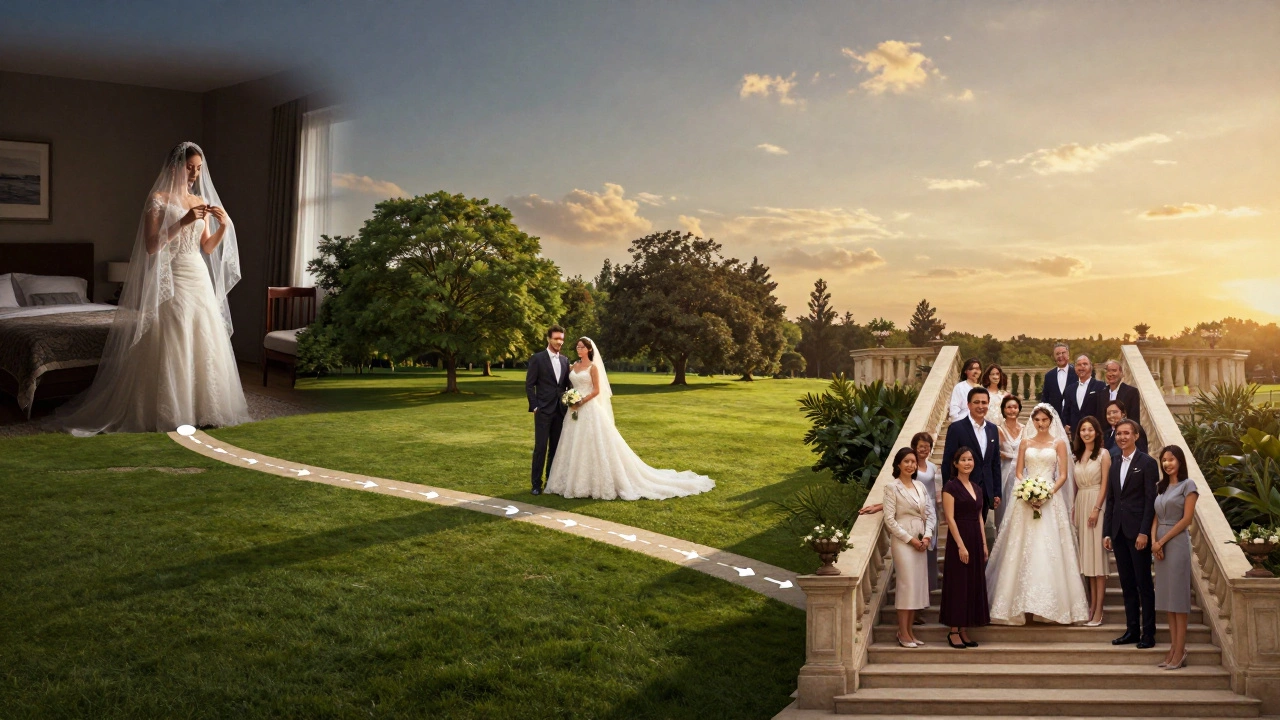
Pre-ceremony photos aren’t just the couple’s portraits. They include:
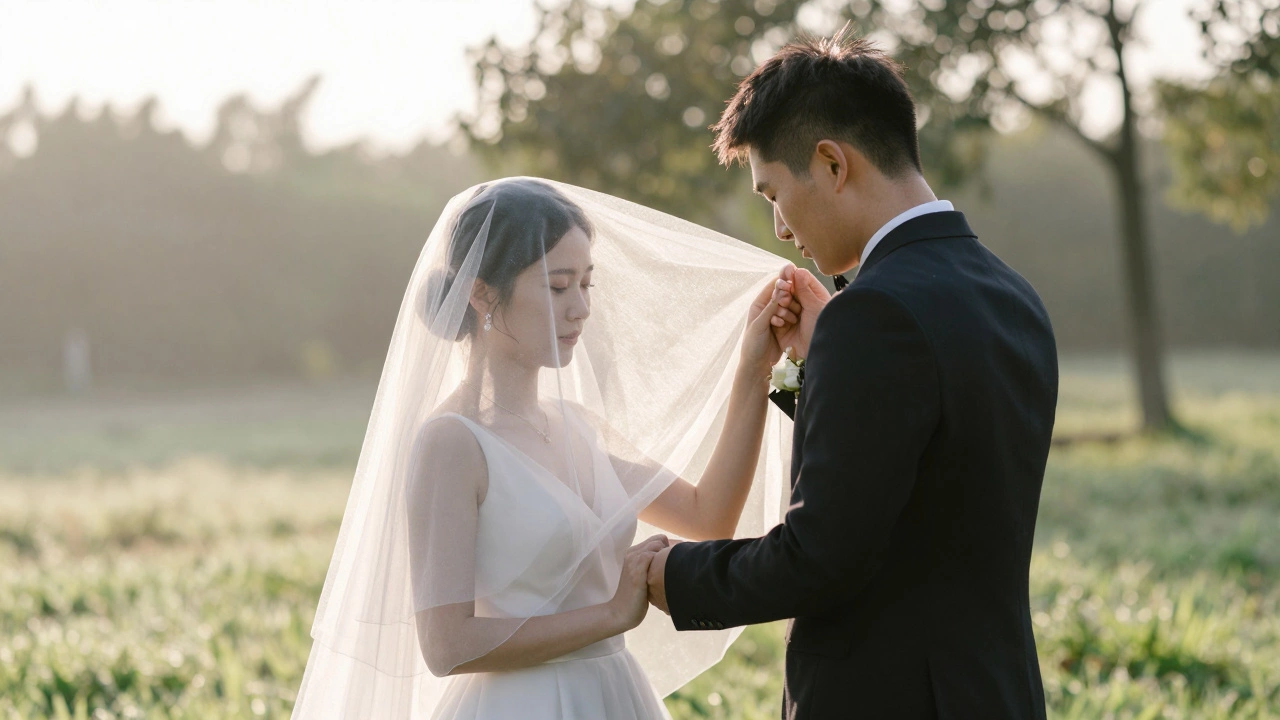
- Getting ready shots - putting on rings, tying ties, first looks with parents
- Couple portraits - romantic shots alone, just the two of you
- Bridal party photos - bridesmaids, groomsmen, flower girls, ring bearers
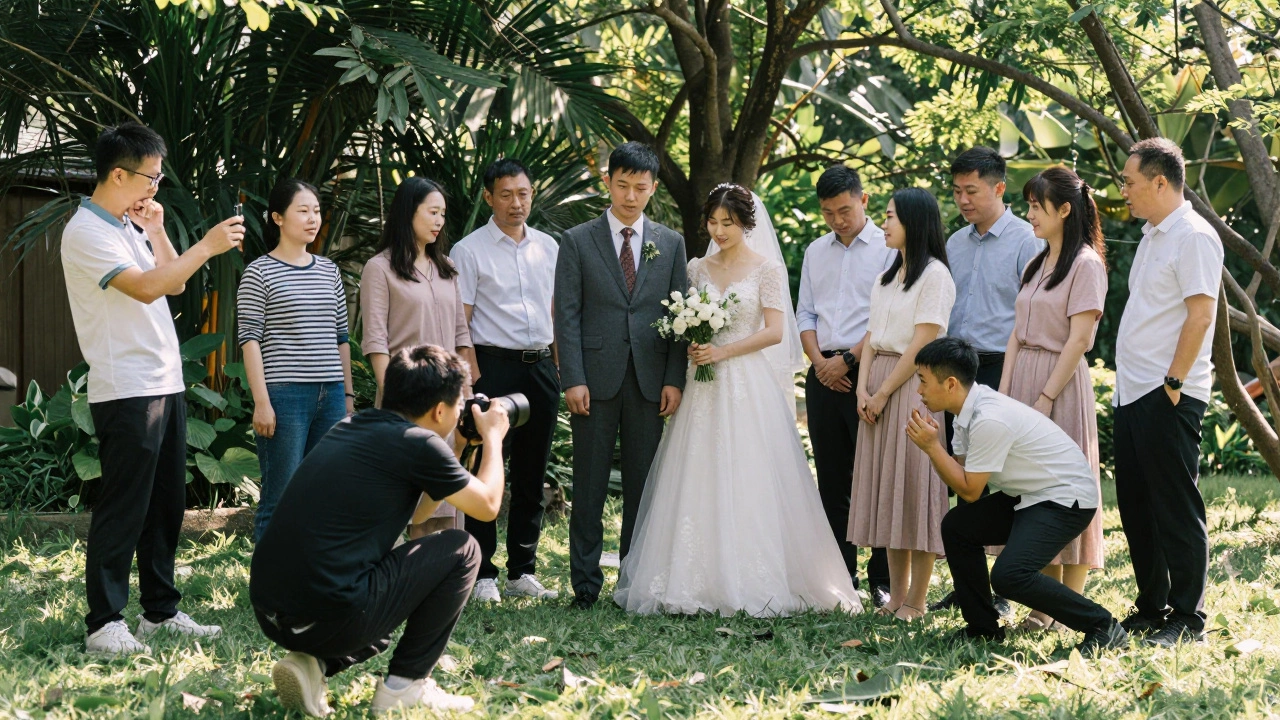
- Family portraits - parents, siblings, grandparents, sometimes extended family
- Location shots - details like the venue entrance, decor, invitations, shoes, rings
Some photographers bundle all of this under "pre-ceremony," while others split it into "getting ready" and "formal portraits." The more you add, the longer it takes.
Why It Takes Longer Than You Think
It’s not just about snapping pictures. It’s about lighting, posing, moving between locations, and managing people.
Let’s say you’re doing a first look. That’s a single moment - but it takes 20 minutes to set up, 5 minutes to shoot, and another 10 minutes to reposition for different angles. Then you move to the ceremony site. That’s 15 minutes of travel and setup. Now you’re on to the bridal party - five people, each needing at least two poses. That’s 15-20 minutes right there.
Family portraits are the biggest time suck. If you have 12 family groupings - parents, siblings, grandparents, aunts and uncles - you’re looking at 45-60 minutes just for those. Even with a well-organized list, people show up late, change outfits, or forget where they’re supposed to stand.
And don’t forget the little things: wind blowing the veil, shoes getting muddy, a sudden rain shower. These aren’t delays - they’re part of the process.
Realistic Timelines by Scenario
Here’s what most couples actually experience, broken down by situation:
Simple Session - 90 Minutes
Best for: Couples who want just the basics - getting ready, couple portraits, and one or two family shots. No big bridal party. One location.
- Getting ready: 20 minutes
- Couple portraits: 30 minutes
- One family group (parents only): 15 minutes
- Location details and transitions: 25 minutes
This works if you’re having a small, intimate wedding and want to get to the ceremony without rushing.
Standard Session - 2 Hours
Best for: Most couples - includes bridal party, 5-8 family groups, and a few extra details.
- Getting ready: 25 minutes
- Couple portraits: 40 minutes
- Bridal party: 25 minutes
- Family portraits: 40 minutes
- Transitions and details: 30 minutes
This is the sweet spot for 80% of weddings. You get good coverage without burning out.
Extended Session - 3 Hours or More
Best for: Large families, multiple locations, destination weddings, or couples who want a lot of variety - golden hour shots, candid moments, unique backdrops.
- Getting ready: 30 minutes
- Couple portraits: 50 minutes
- Bridal party: 35 minutes
- Family portraits: 60+ minutes (10+ groups)
- Location changes: 45 minutes
- Extra details: 20 minutes
If you’re doing a first look at sunrise, then moving to a park, then a historic building, and ending at the venue - this timeline isn’t unusual. Some couples even schedule a second photo session after the reception for golden hour.
How to Save Time Without Sacrificing Photos
You don’t have to cut photos to save time. You just need to plan smarter.
- Make a shot list - Write down every group you want. Give it to your photographer a week before. No guessing on the day.
- Limit family groups - Combine aunts and uncles into one shot. Skip distant cousins unless they’re traveling from out of state.
- Choose one location - If you can, stick to the ceremony site and one nearby spot. Moving between locations adds 15-20 minutes each time.
- Do a first look - This lets you get all couple and bridal party photos done before the ceremony. No rushing after the vows.
- Assign a point person - Someone who knows everyone’s name and can round them up quickly. Don’t ask the bride or groom to do this.
- Be ready on time - If your photographer shows up at 2 PM and you’re still putting on your earrings, you’ve already lost 15 minutes.
What Happens If You Run Late?
It happens. A cousin gets stuck in traffic. The makeup artist runs behind. The car breaks down. Your photographer won’t panic - but they will need to adjust.
Most pros have backup plans:
- Move family portraits to after the ceremony (while guests mingle)
- Shorten couple portraits to 20 minutes instead of 40
- Skip some detail shots (like the invitation or shoes)
- Use natural light instead of setting up reflectors
Don’t stress. Your photos won’t be ruined. But if you’re cutting it too close - say, only 30 minutes between the ceremony and cocktail hour - you’ll miss golden hour. That’s the most beautiful light of the day. And you’ll regret it later.
What to Tell Your Photographer
Don’t assume they know your priorities. Say this:
- "I really want to get a first look - can we schedule that?"
- "My grandparents are getting older. Can we do their photos early?"
- "We’re having a sunset ceremony. Can we plan to be done with photos 45 minutes before?"
Good photographers will help you build a timeline that works. Bad ones will just say, "We’ll make it work." That’s not good enough.
Common Mistakes Couples Make
- Trying to do too many locations - you’ll end up exhausted and rushed.
- Not telling the photographer about special requests - like a cultural tradition or a specific pose.
- Assuming the venue will be ready - sometimes the florist is late, the chairs aren’t set up, or the lighting is terrible.
- Waiting until after the ceremony to take photos - you’ll miss the best light and be too tired to enjoy it.
- Not giving the photographer a buffer - always add 15-20 minutes to your estimated time.
Final Tip: Trust the Process
Pre-ceremony photos aren’t a chore. They’re your first real moment as a married couple - even if you’re not officially married yet. The laughter, the nervous smiles, the way your partner looks at you when they think you’re not watching - that’s what you’ll remember.
Don’t rush it. Don’t stress the clock. Just be present. Your photographer will make sure you get the shots. You just need to show up - and maybe bring a snack.
Do pre-ceremony photos include the ceremony itself?
No. Pre-ceremony photos are everything done before the official ceremony begins - getting ready, portraits, family photos, and couple shots. The ceremony, reception, and first dance are covered in separate sections of your wedding photography package.
Can I do pre-ceremony photos the day before?
Yes - and many couples choose to do this, especially for destination weddings or if they’re nervous about timing on the big day. A pre-wedding session a day or two before can reduce stress and give you more time to relax during the actual ceremony. Just make sure your photographer is okay with splitting the shoot.
How many photos should I expect from a 2-hour session?
Most photographers deliver 80-120 final images from a 2-hour session. This includes a mix of posed portraits, candid moments, and detail shots. You’ll get fewer than you think because the photographer selects only the best - not every shot they take.
Is it worth paying extra for a second photographer?
If you have more than 100 guests or a large family, yes. A second photographer can capture getting ready at two locations at once, or shoot family groups while the main photographer focuses on the couple. It cuts total time by 30-45 minutes and gives you more angles.
What if it rains on my pre-ceremony photo day?
Rain doesn’t mean canceling. Many photographers love rainy days - they create moody, emotional shots. Have a backup indoor location ready. Umbrellas, wet pavement reflections, and steam from coffee cups can make stunning photos. Just bring a towel and a change of shoes.