Drone Compliance & Zone Checker
Flight Parameters
Your Drone Category
--
Enter your drone details to check compliance requirements.
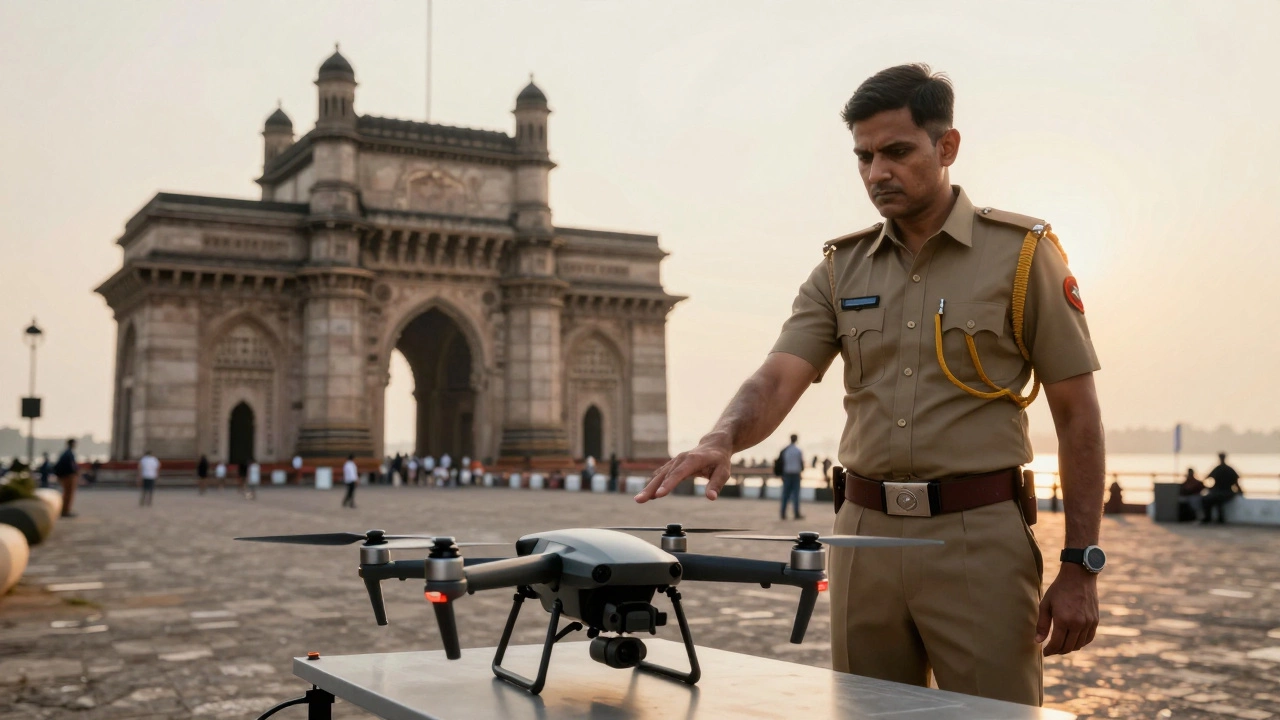
Imagine you are standing on the Marine Drive promenade in Mumbai, the sun setting behind the Gateway of India. You have your camera gear packed and a high-end quadcopter ready to capture that perfect aerial silhouette. You hit 'takeoff,' and within seconds, a local police officer approaches you with a stern look. Why? Because flying a drone in India without knowing the specific drone rules is not just a mistake; it is a legal violation that can lead to heavy fines or even confiscation of your equipment.
The landscape of drone usage in India changed drastically after the government replaced the strict 2021 Drone Rules with the more streamlined Drone Rules, 2022. By July 2026, these regulations are fully enforced, making compliance non-negotiable for anyone who wants to fly legally. Whether you are a hobbyist wanting to film a family vacation in Goa or a professional shooting real estate content in Bangalore, understanding the Digital Sky platform and the categories of drones is essential before you ever touch the remote control.
Understanding the Drone Categories
Before we talk about permits, you need to know what kind of machine you are holding. The Directorate General of Civil Aviation (DGCA) classifies drones based on their weight. This classification dictates how much paperwork you need to handle. It is not one-size-fits-all.
| Category | Weight Range | Registration Required? | Pilot License Needed? |
|---|---|---|---|
| Toys | Below 250 grams | No | No |
| Micro | 250 grams - 2 kg | Yes | No (for green zones) |
| Small | 2 kg - 25 kg | Yes | Yes |
| Medium | 25 kg - 150 kg | Yes | Yes |
| Large | Above 150 kg | Yes | Yes |
If you own a tiny drone like the DJI Mini series that weighs under 250 grams, you fall into the "Toy" category. These do not require registration or a pilot license, provided they stay below certain altitude limits and avoid restricted areas. However, most serious photographers use Micro or Small drones. For these, you must register the drone on the official portal and obtain a Remote Pilot Certificate if it exceeds 2 kilograms.
The Digital Sky Platform: Your First Stop
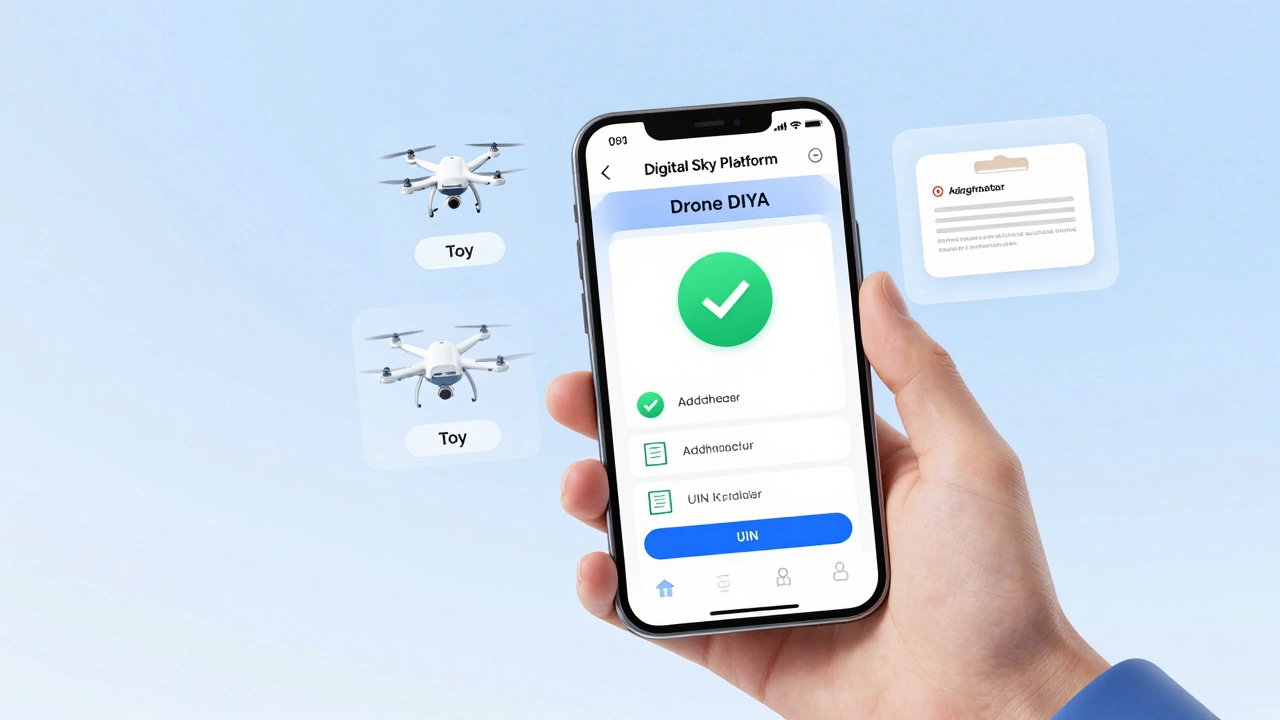
In India, there is no physical office where you submit papers for a drone permit. Everything happens online through the Digital Sky Platform, also known as DroneDIYA. This is the central hub managed by the Ministry of Civil Aviation. If you are not registered here, you are flying illegally.
Here is the step-by-step process every pilot must follow:
- Create an Account: Go to the Digital Sky website and register using your Aadhaar card and mobile number. Verify your identity through OTP.
- Register Your Drone: Enter the Unique Identification Number (UIN) provided by the manufacturer. If you bought the drone from an approved manufacturer in India, this UIN is already linked. If you imported it personally, the process is more complex and may involve customs clearance documents.
- Apply for Registration Certificate: Once the UIN is verified, you receive a Registration Certificate (RC). This is effectively the ID card for your drone. Keep a digital copy on your phone at all times while flying.
For pilots operating Small, Medium, or Large drones, you must also apply for a Remote Pilot Certificate. This involves passing an exam conducted by an authorized training organization. The exam tests your knowledge of airspace regulations, emergency procedures, and basic meteorology. You cannot skip this step if your drone weighs more than 2 kg.
Flying Zones: Green, Yellow, and Red
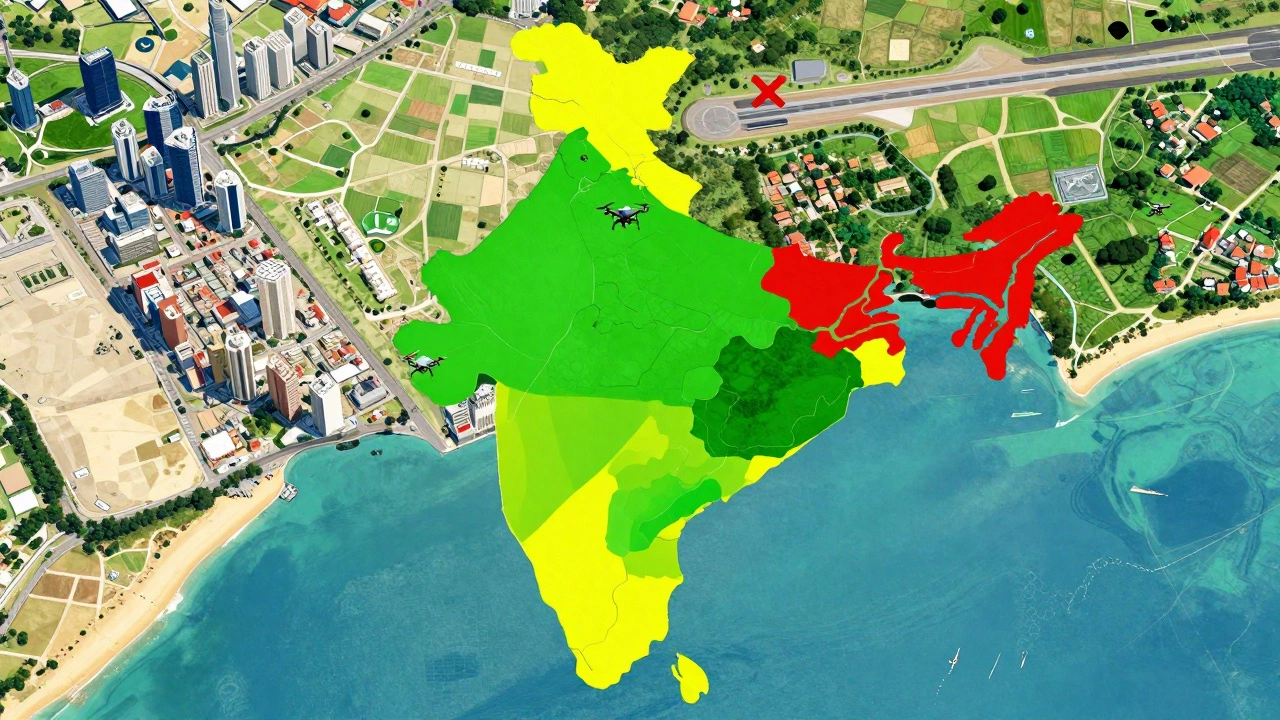
India’s airspace is color-coded to simplify permissions. Understanding these zones is critical because flying in the wrong zone can result in immediate grounding by authorities.
- Green Zone: This is unrestricted airspace. You can fly here without prior permission, provided you have your registration and follow standard safety protocols. Most open fields, beaches, and rural areas fall into this category.
- Yellow Zone: This is semi-restricted airspace. You need prior approval from the Air Traffic Control (ATC) or the relevant authority before flying. Many urban parks and areas near industrial complexes are yellow zones.
- Red Zone: This is strictly prohibited airspace. No drone is allowed here unless you have explicit written permission from the Central Government. This includes airports, military bases, international borders, and monuments of national importance like the Taj Mahal.
You can check the zone map directly on the Digital Sky app. Before every flight, open the app, locate your position, and confirm the zone color. Do not assume that because a beach is public, it is a Green Zone. Coastal areas often have security restrictions due to naval presence.
Key Operational Restrictions
Even in a Green Zone, you must adhere to strict operational limits. These rules are designed to prevent collisions with manned aircraft and protect privacy.
Altitude Limits: You cannot fly above 400 feet (120 meters) above ground level. This is a hard limit. Flying higher puts you in the path of low-flying helicopters and small planes. If you need to go higher for a specific project, you must apply for special permission well in advance, which is rarely granted for casual photography.
Visual Line of Sight (VLOS): You must always keep your drone in sight. You cannot rely solely on FPV (First Person View) goggles or camera feeds. If you lose visual contact, you must land immediately. This rule ensures you can react to unexpected obstacles like birds or power lines.
No-Fly Times: Flying during sunrise and sunset is generally discouraged unless you have specific ATC clearance. More importantly, night flying is prohibited for recreational and most commercial purposes. Drones must be equipped with anti-collision lights if operated between dusk and dawn, but even then, it requires advanced certification.
Privacy and Property: While there is no single federal "privacy law" for drones, Indian courts have upheld the right to privacy under Article 21 of the Constitution. Filming people without consent, especially in private spaces, can lead to civil lawsuits. Always ask for permission before filming individuals close-up.
Penalties for Violations
Ignoring these rules carries serious consequences. The government has empowered local police and aviation authorities to enforce drone regulations strictly.
- Confiscation: Your drone can be seized on the spot if found flying without registration or in a Red Zone.
- Fines: Fines can range from ₹50,000 to ₹5,000,000 depending on the severity of the violation. Flying near an airport can attract the highest penalties.
- Imprisonment: In cases involving national security threats or repeated violations, imprisonment up to five years is possible.
I once saw a friend in Pune get his drone confiscated because he flew near a railway station without checking the zone map. He lost thousands of rupees and had to file multiple affidavits to try and recover it. It was a costly lesson in checking the Digital Sky app first.
Commercial vs. Recreational Use
If you plan to make money from your drone footage, the rules tighten further. Commercial operators must:
- Obtain a Permit to Fly (PTF) for each location, even in Green Zones, if the activity is deemed high-risk.
- Maintain insurance coverage for third-party liability. This is mandatory for commercial operations.
- Keep detailed logs of every flight, including time, location, altitude, and purpose. These logs must be submitted to the authorities upon request.
Recreational flyers do not need insurance or PTFs for Green Zone flights, but they still need registration for drones over 250 grams. Blurring the line between hobby and business can lead to legal scrutiny, so keep your records clear.
How to Stay Updated
Regulations evolve. The DGCA occasionally issues advisories regarding temporary no-fly zones due to political events, festivals, or security alerts. Subscribe to notifications on the Digital Sky platform and follow official DGCA social media channels. Do not rely on outdated blogs or forum posts from 2021. The rules in 2026 are distinct, and compliance is your responsibility.
Flying a drone in India is an exciting privilege, not a right. By respecting the airspace, registering your equipment, and understanding the zones, you ensure that the skies remain open for everyone. Safe flying starts with smart preparation.
Do I need a license to fly a drone in India?
It depends on the weight of your drone. If your drone weighs less than 250 grams (Toy category), you do not need a license. For Micro drones (250g-2kg), you need registration but not necessarily a pilot license for Green Zone flights. However, for Small, Medium, and Large drones (above 2kg), you must hold a valid Remote Pilot Certificate issued by the DGCA.
Can I fly a drone near airports in India?
No, flying near airports is strictly prohibited. Airports and their surrounding areas are designated as Red Zones. Unauthorized drone flights in these areas pose a severe threat to aviation safety and can result in immediate confiscation, heavy fines, and potential imprisonment.
What is the maximum height I can fly my drone?
The general limit for drone flight altitude in India is 400 feet (120 meters) above ground level. Exceeding this height requires special permission from the Air Traffic Control, which is rarely granted for non-commercial or recreational purposes.
Is it legal to import drones into India?
Importing drones for personal use is highly restricted and often prohibited. The government encourages buying drones manufactured in India to support the 'Make in India' initiative. If you must import, you need specific licenses from the DGCA and must comply with customs regulations, which can be complex and expensive.
Where can I register my drone in India?
All drone registrations in India are done online through the Digital Sky Platform (DroneDIYA). You will need your Aadhaar card, mobile number, and the drone's Unique Identification Number (UIN) to complete the registration process.