Photo Album Cost & Value Calculator
Estimate the cost of creating a physical memory book and calculate the long-term value per view compared to digital storage.
Results
You have thousands of pictures on your phone. Maybe even hundreds of thousands if you’ve been snapping away since the early 2010s. You scroll through them occasionally, smile at a few, and then swipe past them again. But do you ever stop to think about what happens when that phone dies? Or when the cloud service changes its terms? Or simply when you get too old to care about pixels?
The question isn’t just nostalgic; it’s practical. In 2026, with AI-generated images flooding our feeds and digital storage becoming virtually infinite, photo album printing seems like a relic from another era. Yet, walk into any high-end stationery store or browse online marketplaces, and you’ll see a booming industry dedicated to turning those JPEGs into tangible objects. So, do people still print photos for albums? Yes, they do. But not for the reasons they did twenty years ago.
The Shift From Quantity to Curation
Let’s look at the numbers first. According to recent data from the Photo Marketing Association, while overall photo printing volumes have dipped compared to the peak of the digital transition around 2010, premium photo book sales have risen by over 15% annually since 2022. This tells us something important: people aren’t printing *more* photos; they are printing *better* photos.
In the past, you bought a roll of film, took 24 shots, developed them, and kept almost all of them because each one cost money. Today, taking a picture costs nothing. The value has shifted from the act of capturing to the act of selecting. When you decide to create a physical album now, you are engaging in an intense curation process. You are choosing the top 1% of your memories to preserve permanently.
This curation is powerful. It forces you to revisit moments you might otherwise forget. I remember helping my grandmother organize her old boxes of photos last year. She didn’t have a smartphone, but she had leather-bound albums from the 1970s. Each page told a story. There were no blurry duplicates, no accidental screenshots of memes. Just intentional memories. That intentionality is what drives modern photo printing.
Why Digital Storage Is Not Enough
We often assume that "cloud" means permanent. It doesn’t. Cloud services are businesses. They change pricing models, shut down features, or go bankrupt. We’ve seen this happen before with social media platforms hosting millions of user photos that vanished overnight when servers were decommissioned.
Consider the concept of "digital decay." File formats change. What works on your iPhone today might not open on a device in 2035 without specialized software. A printed photo, however, requires no battery, no Wi-Fi, and no operating system update to view. It is self-contained. If you hold a glossy 4x6 print or a hardcover photo book, you can see it exactly as it was intended, forever (assuming you keep it out of direct sunlight).
There is also the psychological aspect. Studies in environmental psychology suggest that physical objects carry more emotional weight than digital files. Holding a photo book triggers tactile memories-the smell of paper, the texture of the cover, the weight in your hands. These sensory details anchor the memory in your brain more deeply than swiping a glass screen ever could.
The Rise of Premium Photo Books
If you’re thinking about getting back into the habit of preserving memories, don’t bother with cheap drugstore prints. Those are fine for fridge magnets, but they fade quickly and feel disposable. The current trend is toward high-quality, lay-flat photo books.
Lay-flat binding is a game-changer. Traditional spiral bindings leave a gap in the middle where photos get hidden or creased. Lay-flat books use advanced adhesive techniques so that spreads across two pages look like one continuous image. This is perfect for panoramic shots or large group photos where you don’t want faces cut off by a spine.
Here is how the major players compare in 2026:
| Service | Best For | Paper Quality | Price Range (Standard Size) | Customization Level |
|---|---|---|---|---|
| Shutterfly | Beginners & Templates | Good (Glossy/Matte) | $30 - $60 | High (Drag-and-drop editor) |
| Mixbook | Design Flexibility | Very Good (Premium options) | $35 - $70 | Very High (Free-form layout) |
| Artifact Uprising | Aesthetic Minimalists | Excellent (Archival grade) | $80 - $150 | Low (Curated templates only) |
| Mpix | Photographers/Professionals | Superior (Fine art papers) | $40 - $90 | Medium (Focus on image quality) |
Notice the price difference. Artifact Uprising charges a premium because they focus on design simplicity and archival materials. Their books are meant to sit on a shelf as decor. Mixbook offers more tools for people who want to add stickers, text bubbles, and complex layouts. Choose based on whether you value ease of design or long-term preservation.
How to Start Without Overwhelm
The biggest barrier to printing photos is decision fatigue. You look at your camera roll and freeze. Where do you start? Here is a simple framework I use with clients who want to preserve their memories:
- The One-Year Rule: Don’t try to archive your entire life. Start with the last 12 months. Pick three key events: a vacation, a family gathering, and a personal milestone (like a graduation or home purchase).
- The 20-Photo Limit: For a standard 8x11 inch album, aim for 20-30 high-quality images. More than that, and the photos become small and hard to read. Less than that, and the book feels empty. Quality beats quantity every time.
- Edit Before You Upload: Never upload raw photos directly to a printing service. Crop out distractions, adjust exposure, and ensure faces are sharp. Use basic editing apps like Lightroom Mobile or Snapseed. A well-edited photo looks professional; a poorly lit snapshot looks amateur, even on expensive paper.
- Add Context: Digital photos lack context. Who is that person? Why are you laughing? Add short captions. Not paragraphs-just dates, names, and one sentence about the moment. This turns a picture into a story for future generations.
The Social Aspect of Physical Albums
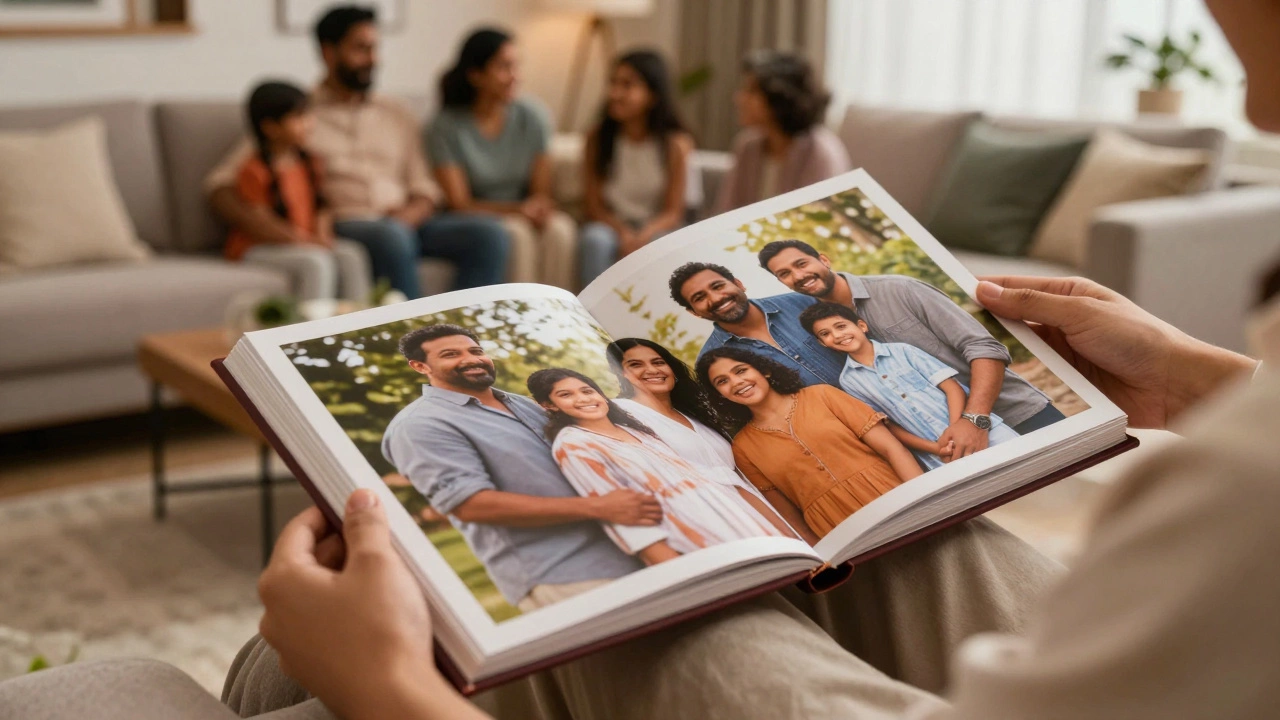
Think about the last time you showed someone your phone gallery. How long did they look? Probably ten seconds. Then they handed it back. Now, imagine sitting on a couch with a guest, opening a beautiful coffee-table-style photo book. You turn the pages together. You point out details. You tell stories. The physical object slows down the interaction. It creates space for conversation.
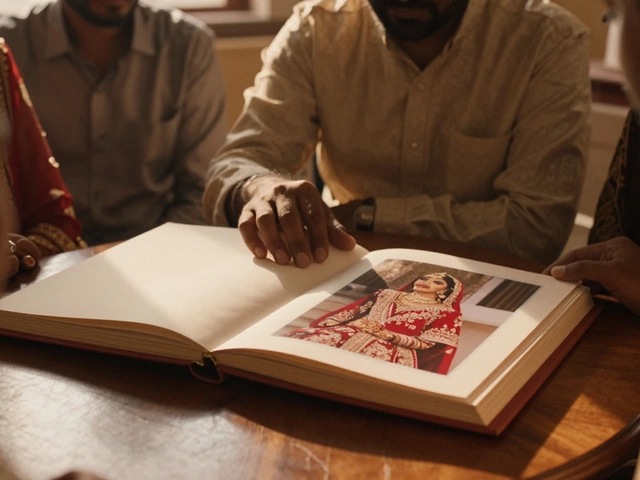
This is especially true for weddings and births. In Mumbai, where I live, families are still very traditional. Even among tech-savvy millennials, there is a strong expectation to produce a physical wedding album. It’s not just for the couple; it’s for the grandparents who may not be comfortable using tablets. It’s a gift that bridges the generational digital divide.
Even in less traditional settings, giving a printed photo book as a gift carries more weight than sending a digital link. It shows effort. It says, "I spent time selecting these moments because they matter to me." That emotional currency is priceless.
Sustainability and Environmental Concerns
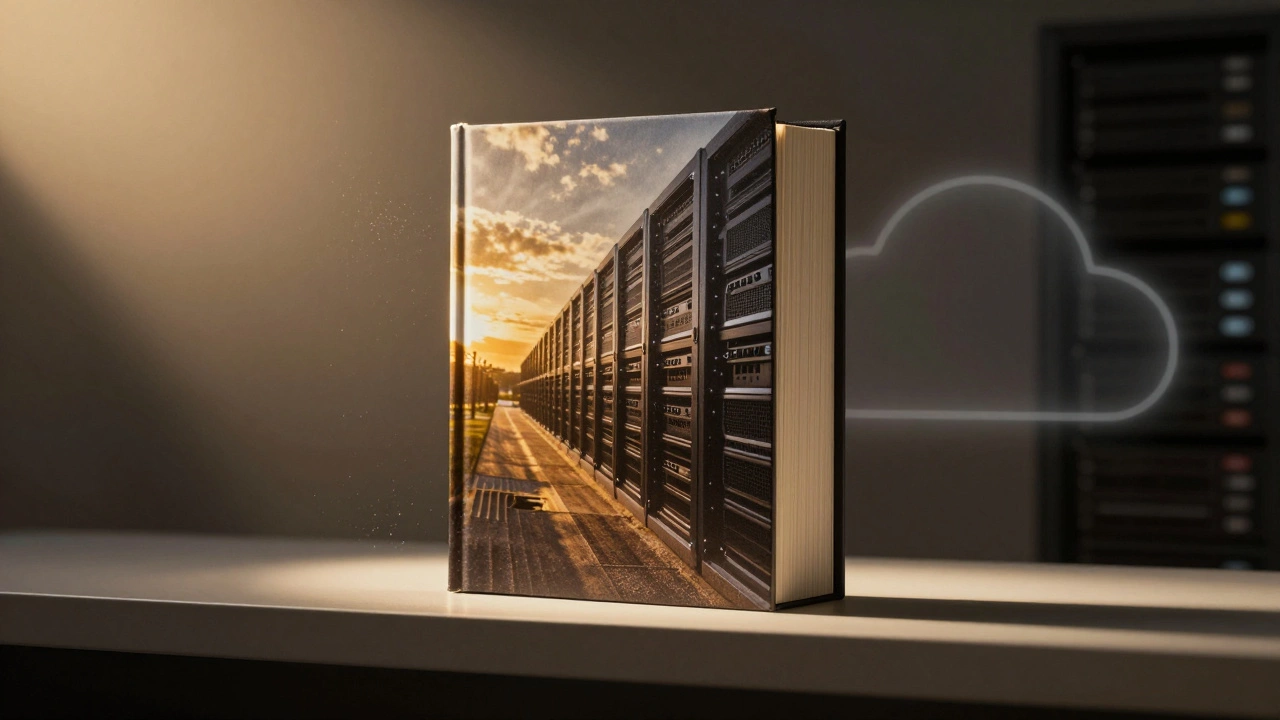
I know what some of you are thinking: "Isn’t printing photos bad for the environment?" It’s a valid concern. Paper production involves trees, water, and chemicals. However, consider the alternative: the energy cost of maintaining massive server farms for digital storage. Data centers consume approximately 1-2% of global electricity, and that number is growing as we store more video and high-res images.
Furthermore, many modern photo printing companies are adopting sustainable practices. Look for brands that use FSC-certified paper (from responsibly managed forests) and soy-based inks instead of petroleum-based ones. Some even offer carbon-neutral shipping. If you buy one high-quality book that lasts 50 years, versus storing terabytes of data on servers that require constant cooling and power, the environmental impact is comparable. The key is to avoid wastefulness-don’t print low-quality junk. Print with purpose.
Future-Proofing Your Memories
As we move further into the age of AI, the authenticity of human experiences becomes more valuable. AI can generate perfect-looking images of places you’ve never been. But it cannot replicate the specific, imperfect, joyful chaos of your actual life. A printed photo album is proof of presence. It says, "I was here. This happened. I cared enough to keep it."
So, do people still print photos for albums? Absolutely. But it’s no longer about convenience. It’s about legacy. It’s about deciding which moments deserve to survive beyond the lifespan of a smartphone battery. It’s about creating artifacts that your grandchildren can hold, touch, and understand without needing a password.
If you haven’t printed anything in years, start small. Pick one event from this past year. Select ten photos. Order a single-page print or a mini-book. See how it feels to hold it. You might find that the digital world feels a little lighter, and your heart feels a little fuller.
Is it cheaper to print photos at home or use a lab?
For small batches (under 50 photos), home printers with ink tanks can be cost-effective. However, for photo books or large orders, professional labs are significantly cheaper per unit and offer higher color accuracy and archival quality. Home printers also struggle with consistent white balance and longevity unless you invest in expensive pigment inks.
How long do printed photo albums last?
If stored properly (away from direct sunlight, humidity, and extreme temperatures), high-quality archival photo books can last 50 to 100 years without significant fading. Standard dye-sublimation prints used by most online services are rated for 20-30 years. Always check for "archival" or "fade-resistant" labels when ordering.
Can I edit my photos after uploading them to a printing service?
Most online services allow minor adjustments like cropping, rotation, and brightness/contrast tweaks within their editors. However, for best results, perform detailed edits (color correction, retouching) in dedicated software like Adobe Lightroom or Photoshop before uploading. Online editors are limited and can compress image quality.
What is the best size for a family photo album?
The 8x11 inch (or A4) size is the most popular for family albums. It’s large enough to see details clearly but small enough to fit on a standard bookshelf. For wedding albums, 12x12 inches is common to accommodate larger landscape shots and double-page spreads. Avoid sizes smaller than 6x6 inches for albums, as photos become too tiny to appreciate.
Should I choose glossy or matte finish for my photo book?
Glossy finishes make colors pop and are great for vibrant landscapes and portraits, but they show fingerprints and glare under lights. Matte finishes reduce glare, hide fingerprints, and give a more artistic, soft look, ideal for black-and-white photos or vintage styles. Many people prefer matte for everyday viewing and glossy for special occasion books.