Studio Startup Cost Calculator
Calculate Your Startup Costs
Estimated Startup Costs
Equipment Costs:
₹0
Space Setup Costs:
₹0
Total Estimated Startup Cost: ₹0
Note: These are estimated costs based on the Indian market in 2025. Your actual costs may vary based on location, specific equipment choices, and market conditions.
Starting a studio business in India isn’t just about buying a camera and hanging a backdrop. It’s about building a space where people trust you to capture their most important moments-weddings, newborns, portraits, or even corporate headshots. And if you’re doing it right, you can turn a small room in your home into a full-time income. In 2025, the demand for professional photography services in India is growing fast, especially in cities like Mumbai, Delhi, and Bangalore. But here’s the truth: most people fail not because they can’t take good photos, but because they skip the business side.
Know What Kind of Studio You Want
Not all studios are the same. Before you spend a rupee, decide what you’ll actually be shooting. A wedding studio needs space for group shots, changing rooms, and quick turnaround editing. A portrait studio might focus on headshots for professionals or family photos. A product studio for e-commerce needs clean lighting, white backdrops, and fast editing workflows. Your niche shapes everything-from the size of your space to the gear you buy.For example, if you’re targeting corporate clients in Mumbai, you’ll need a clean, modern look with neutral lighting and a quiet space for 30-minute sessions. If you’re going after newborns, you’ll need soft lighting, a warm room, and props that are safe and easy to clean. Pick one niche first. Don’t try to do everything. Specialization builds trust and helps you charge more.
Choose Your Location Wisely
You don’t need a fancy storefront to start. Many successful studios in India begin in rented apartments, spare rooms, or even garage conversions. In Mumbai, a 300 sq. ft. space in a residential building like Andheri or Ghatkopar can cost ₹15,000-₹25,000 per month. That’s cheaper than a commercial lease and often easier to get approved for.But location still matters. You want to be near your target clients. If you’re doing family portraits, pick an area with lots of young families. If you’re doing product photography for Amazon sellers, being close to warehouses or logistics hubs helps. Also, check parking, elevator access, and power backup. One studio owner in Pune lost three clients in a month because her studio lost power during a session-no one came back.
Start with the Essentials, Not the Expensive Gear
You don’t need a ₹5 lakh camera setup to start. A good full-frame camera like the Canon EOS R5 or Sony A7 IV, one or two speedlights, a couple of softboxes, a collapsible backdrop system, and a reliable laptop for editing will get you started for under ₹2 lakh. That’s less than what most people spend on a high-end smartphone.Focus on lighting. Bad lighting ruins even the best camera. A basic two-light setup with diffusers costs ₹30,000-₹40,000 and can do 80% of the work. Buy used gear from trusted sellers on OLX or Facebook groups-many professionals upgrade every 2-3 years and sell in good condition. Avoid cheap tripods and unknown brands. A shaky stand means blurry photos. And always get a backup battery and memory cards. Running out of power mid-session is a career-killer.

Set Up Your Studio Space
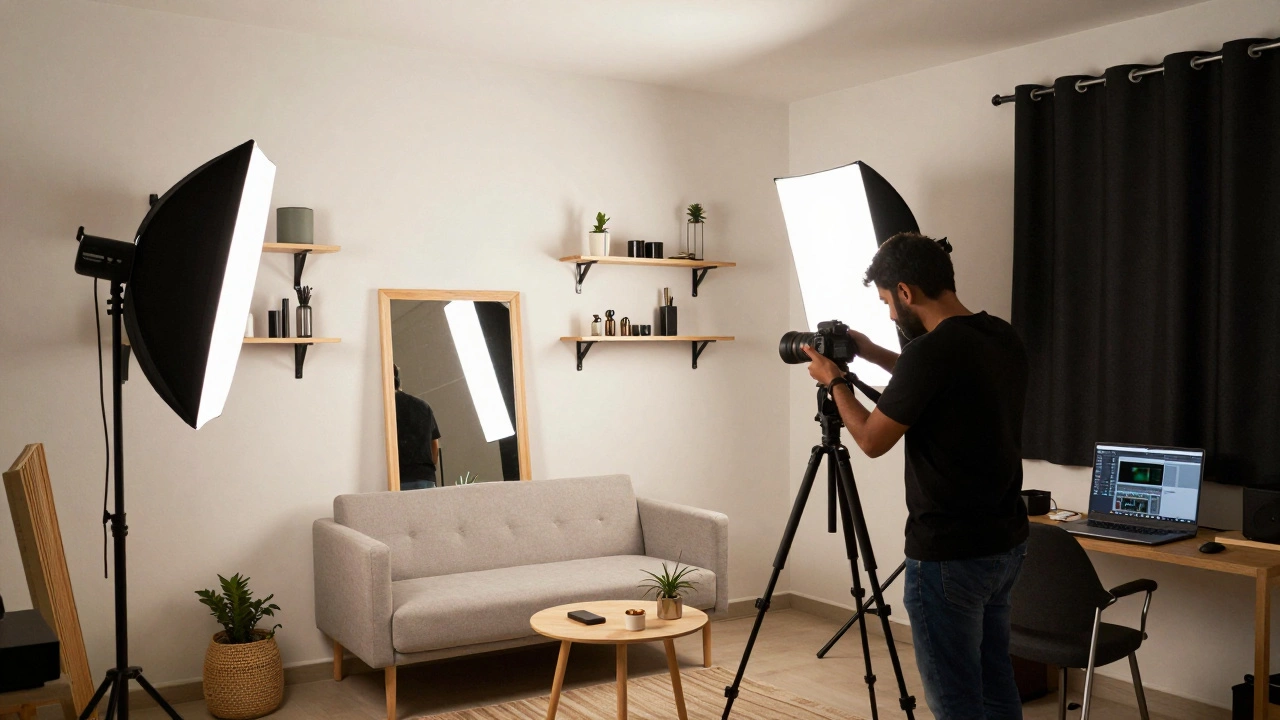
Your studio doesn’t need to be big, but it needs to be functional. Start with these zones:- Shooting area: 8x10 ft minimum, with space to move around the subject. Paint walls white or gray for better light reflection.
- Client area: A small seating corner with a chair, mirror, and water. People feel more comfortable when they’re not standing in a cold, empty room.
- Editing station: A desk with a good monitor, external hard drives, and a quiet fan. Noise from your computer can ruin audio if you’re doing video.
- Storage: Shelves for backdrops, props, and gear. Label everything. You’ll thank yourself later.
Lighting is key. Use daylight-balanced LED panels if you can-they’re energy-efficient and don’t heat up the room like tungsten lights. Install blackout curtains. Even a little sunlight coming through a window can mess up your color balance. And don’t forget ventilation. A studio can get hot fast with lights on. A small exhaust fan costs ₹2,000 and makes a big difference.
Handle the Legal and Financial Side
Many photographers skip this-and regret it later. You need to register your business. In India, you can start as a sole proprietorship (easy and cheap) or register under the Udyam scheme for MSMEs. It takes 1-2 days online and costs under ₹1,000. You’ll get a Udyam Registration Number, which helps when applying for loans or selling to bigger clients.Open a separate bank account for your studio. Mix personal and business money, and you’ll lose track of profits. Use free accounting apps like Zoho Books or Google Sheets to track income and expenses. Save receipts for everything-lighting gear, electricity, software subscriptions, even your coffee during editing sessions. You can claim tax deductions on business expenses.
Also, get basic liability insurance. If a client slips and falls in your studio, you could be sued. A ₹5 lakh policy costs around ₹3,000/year. It’s not glamorous, but it’s protection.
Build Your Brand and Online Presence
Your website doesn’t need to be fancy. A simple WordPress site with your best 10 photos, a clear service list, and a contact form is enough. Use your name or your studio name as the domain-like anujphotostudio.in. Don’t use numbers or weird spellings.Instagram is your best friend. Post consistently. Show behind-the-scenes clips, client reactions, and before-and-after edits. Use hashtags like #MumbaiPhotographer, #StudioSetupIndia, #WeddingPhotographerMumbai. Reply to every comment. Engagement builds trust faster than ads.
Ask every client for a testimonial. A simple video message from a happy bride saying, “Anuj made us feel so comfortable,” is worth more than any billboard. Put it on your website and Instagram. People believe other people more than ads.
Price Your Services Right
Don’t underprice. Charging ₹5,000 for a 2-hour portrait session might get you clients, but they’ll expect everything to be free next time. Research what others in your city charge. In Mumbai, a professional portrait session starts at ₹12,000-₹20,000. Wedding packages start at ₹50,000.Break your pricing into tiers:
- Basic: 1 hour, 15 edited photos, digital delivery - ₹10,000
- Standard: 3 hours, 40 edited photos, album option - ₹25,000
- Premium: Full day, 80+ photos, 2 photographers, printed album - ₹75,000+
Always charge a 50% deposit to book. It filters out tire-kickers. And never say “I’ll send you the photos later.” Set a delivery timeline-7-10 days max. Delays hurt your reputation.
Grow Slowly, But Consistently
Your first 10 clients are your foundation. Do excellent work. Be on time. Communicate clearly. Ask for referrals. Offer a ₹1,000 discount to clients who bring a friend. Word-of-mouth is the most powerful marketing tool in India.After 6 months, you can hire a part-time assistant to handle editing or client calls. Use free tools like Canva for social media posts, Google Calendar for bookings, and WhatsApp for reminders. Keep costs low. Reinvest profits into better lighting, a better computer, or a small ad campaign on Instagram.
Don’t rush to open a second location. Master one studio first. Many photographers burn out by trying to scale too fast. Focus on becoming the go-to person in your neighborhood. That’s how real businesses are built-not by spending money, but by earning trust.
Common Mistakes to Avoid
- Buying gear before you know your niche
- Working for free for ‘exposure’-it devalues your work
- Ignoring contracts-always have a simple agreement signed before the shoot
- Not backing up files-use two external drives or cloud storage like Google Drive
- Skipping post-session follow-up-send a thank-you message. It leads to repeat business
One photographer in Jaipur started with just a ₹75,000 setup in his living room. Two years later, he’s running two studios and teaching workshops. He didn’t have the fanciest gear. He just showed up, did great work, and kept his promises.
How much does it cost to start a studio business in India?
You can start a basic photography studio in India for ₹1.5 lakh to ₹3 lakh. This includes a camera (₹80,000-₹1.2 lakh), lighting gear (₹30,000-₹50,000), backdrops and props (₹10,000), editing software (₹5,000), and a simple setup for your space. Rent and utilities are extra. Many start from home to cut costs.
Do I need a commercial space to run a studio?
No. Many successful studios in India operate from rented apartments, spare rooms, or converted garages. A commercial lease isn’t necessary unless you’re doing high-volume work like product photography for big brands. Residential spaces are cheaper and often easier to get approved for. Just make sure the space has good power backup, ventilation, and enough room to move around.
What camera should I buy to start a studio?
A full-frame camera like the Canon EOS R5, Sony A7 IV, or Nikon Z6 II is ideal. These handle low light well and give you the detail needed for professional work. If you’re on a tight budget, a used Canon 5D Mark IV or Sony A7 III can be found for ₹50,000-₹70,000. Focus on lenses too-a 50mm f/1.8 is affordable and perfect for portraits.
How do I find my first clients?
Start with friends, family, and neighbors. Offer a discounted session in exchange for honest feedback and a testimonial. Post your work on Instagram with local hashtags. Join Facebook groups like ‘Mumbai Photographers Network’ or ‘India Wedding Photographers’. Offer a free mini-session to local influencers or small businesses-they’ll share your work with their followers.
Is photography studio business profitable in India?
Yes, if you focus on quality and consistency. A studio doing 10 portrait sessions a month at ₹20,000 each brings in ₹2 lakh/month. After expenses (rent, electricity, software, marketing), a healthy profit is ₹80,000-₹1.2 lakh. Wedding packages can bring in ₹50,000-₹1.5 lakh per event. Profitability comes from repeat clients and referrals, not one-off gigs.
If you’re serious about starting a studio, begin today-not when you have more money, more gear, or more time. The best time to start was yesterday. The second best time is now. Pick your niche, set up your space, and take your first shot. The rest will follow.